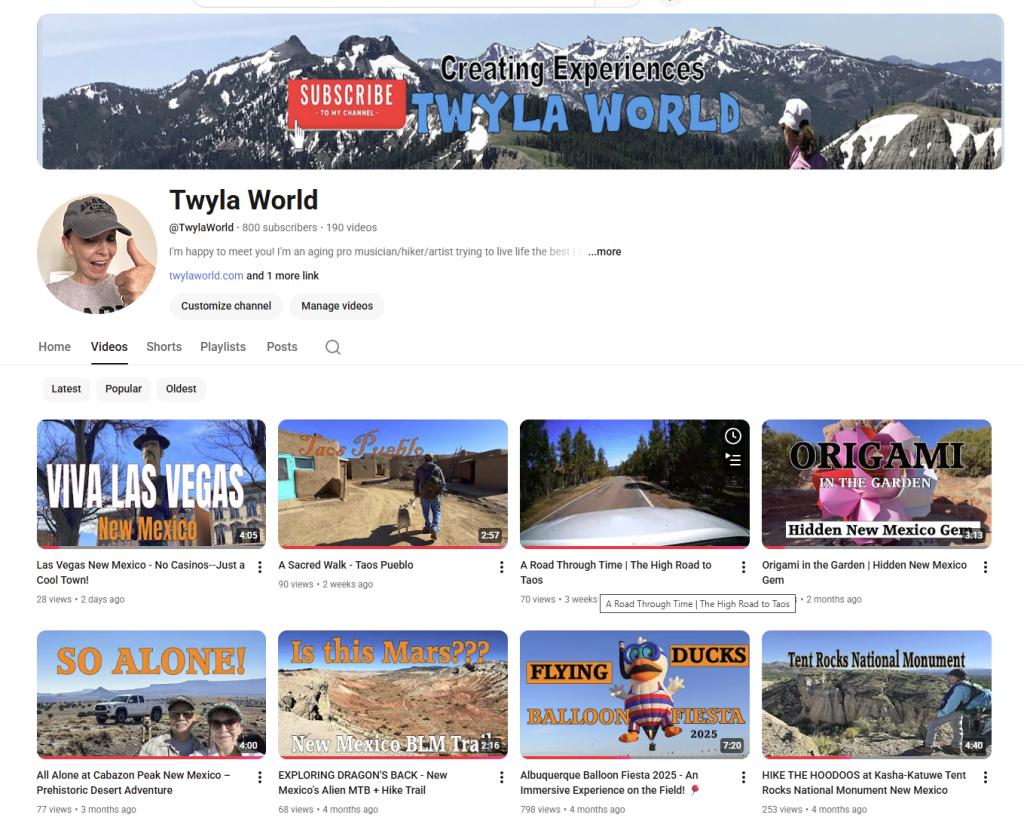
(After Launching My Channel in 2006) Twenty freakin’ years!
Not 8000, Not 80,000, Eight hundred. Yeah, you read that right! 800 and teetering…
Fun Fact: Only 10 % of YouTube Channels reach 1000 subscribers. I’m in good company with the other 90%.
My very first video 20 years ago was a grainy, low-resolution clip of my sister shadow dancing at Burning Man. (since removed) I edited it in Windows Movie Maker. Digital cameras were still evolving, and the videos were Blurry. Tiny. Imperfect.
But that didn’t stop me. I continued to film and upload.
Back then, nobody really knew what YouTube was supposed to be. It was the Wild West. People posted funny skits, awkward home movies, random moments of life. No strategy. No branding. No algorithms to decode. Just curiosity and creativity.
Then came the how-to videos. Those were gold!
I remodeled parts of my house using YouTube tutorials. Total strangers taught me things I might never have learned otherwise. That was the magic — people sharing what they knew.
When I started uploading my trick riding videos, I picked up a couple hundred subscribers fairly quickly. For a minute, it felt like momentum.
Then YouTube introduced ad revenue.
I made pennies….literal pennies.
And then they changed the rules — you needed 1,000 subscribers and thousands of watch hours to qualify for monetization. That’s when my growth slowed to a crawl.
I didn’t have a niche. I didn’t have a strategy. I just wanted to share my crazy life in an artful way.
I’m a musician. A hiker. A traveler. A ranch owner. An artist. A complete jackie-of-all-trades.
Over time, my equipment improved. My editing improved. I spent hours polishing videos into little documentaries of my adventures.
And sometimes they were full-blown documentaries.
I once flew to Kansas to stay with a family living in the middle of wheat fields as far as the eye could see. I filmed their simple life as farmers and the one-room schoolhouses they were restoring. I submitted that film to festivals.
Some of my videos have over 100,000 views. Others have 25.
My subscriber count? It creeps.
I gain a few. I lose a few. I gain a couple more. It inches forward.
It’s always teetering!
One day I’ll hit 1,000 subscribers. Or maybe I won’t.
But here’s what I’ve realized: That number isn’t the point.
The point is that I’ve documented my life.
When I go back and watch videos from ten or fifteen years ago, I smile. I remember who I was. What I cared about. What my voice sounded like. The light in my eyes. The people who were still here.
YouTube became my time capsule.
If I ever get dementia, I hope someone sits me down and presses play.
“Look,” they’ll say. “This was you.”
And I’ll get to meet myself all over again.
800 subscribers – still filming.
Go take a look and don’t forget to SUBSCRIBE! I want to get to 801!
My Quest for Native American Ancestry Began with a Photograph
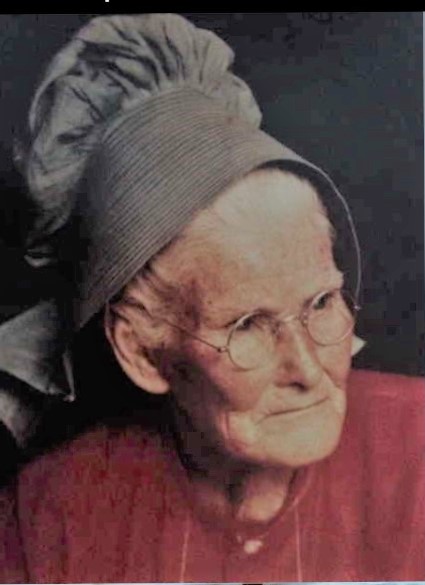
My quest to learn more about my ancestors began with a photograph of my great-grandmother that appeared in a newspaper sometime in the late 1940s. The image was captioned simply: “Lady in a Sun Bonnet.”
The accompanying article read:
“The pioneer Kentucky mountain families of the Cornetts and Isons gathered recently for a reunion along Leatherwood Creek in Perry County. One of the most striking persons present was Mrs. Polly Ann Cornett. Her snow-white hair was accentuated by a bright red waist. Her love for red, she explained, was inherited from Indian ancestry. Her paternal grandfather was Indian. She recalled that her brother always wore a red necktie. Her brother is Hiram Brock, a state senator and political leader in Eastern Kentucky for many years.”
Indian ancestry?
This was the first I had ever heard of it.
So I asked my dad.
“Oh yeah,” he said casually. “We have some Indian blood in the family.”
That was pretty much the extent of what anyone seemed to know.
At the time, all I really understood about my family tree was that my dad was born and raised in Eastern Kentucky—Harlan County—and my mom was born in Oklahoma. I had red hair, blue eyes, freckles, and very fair skin. My mom had blondish hair, blue eyes, and fair skin. My dad had black hair, blue eyes, and tanned easily.
Long before DNA testing was a thing, I began researching my dad’s side of the family the old-fashioned way. I eventually traced his lineage back to a Cherokee chief named Chief Red Bird, who would be my fifth great-grandfather. But the Native blood went back even further than that.
In the early frontier days, it was not uncommon for settlers—often mountain men—to take Native wives. Over generations, that bloodline eventually culminated with Red Bird. From there, as families moved out of the Kentucky hollers and intermarried, the ancestry became increasingly European.
Years later, when online DNA testing became readily available, I had my dad—at 99 years old—spit into a 23andMe tube. The results showed 2% Indigenous ancestry. Through additional research, I also found Shawnee ancestry in the mix.
I solved one family mystery but learned about another tribe where my DNA is the strongest.
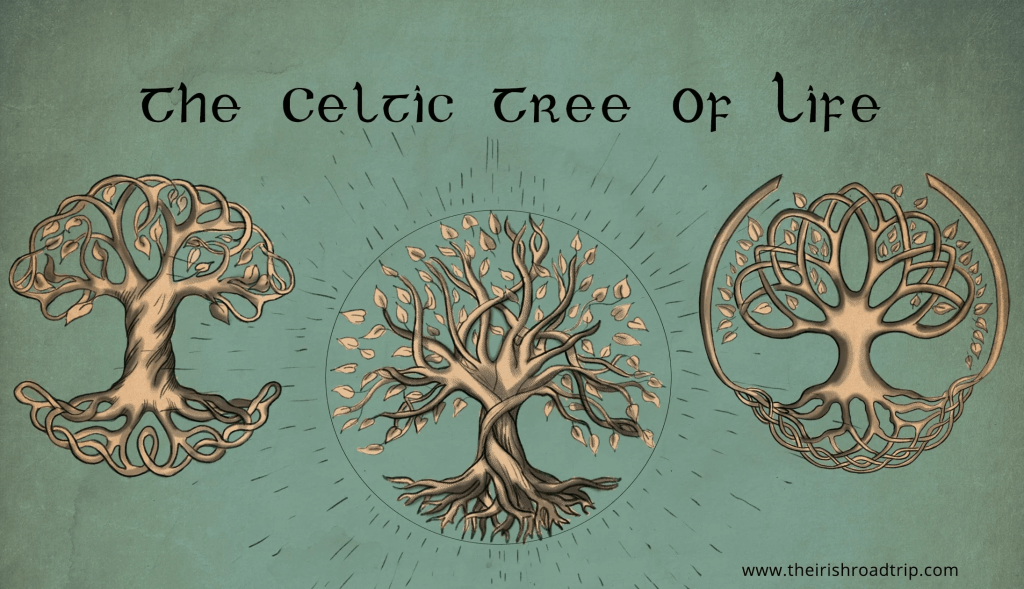
The Celts
The Celts, much like Native Americans, were peoples who were tribal in structure—bound by clans, kinship, land, and oral history. Peoples whose spiritual traditions were ancient, whose ceremonies and beliefs stretched back thousands of years bound by nature.
The Erasure
Long before the colonization of the Americas, England had already honed its appetite for conversion at home. Celtic peoples in Ireland, Scotland, and Wales were targeted not just for their land, but for their beliefs. Conversion was framed as salvation, but it functioned as control. Oral traditions were discouraged or destroyed, sacred sites were repurposed, clan systems were dismantled, and spiritual practices were labeled pagan, savage, or uncivilized—language later reused almost verbatim in the New World. Celtic children were taught that their native tongues were backward or shameful, a strategy later replicated almost exactly in Native American boarding schools. When a language is erased, so too are the stories, ceremonies, and meanings that cannot be translated.
Much of the Celtic tribal belief system was lost—not because it was primitive or weak, but because it was deliberately dismantled through conquest, forced conversion, and the erasure of oral tradition. What remains are fragments: folklore, language, seasonal customs, and a lingering sense of belonging to land and kin—echoes of what once was whole.
Christianity was the primary tool used to justify cultural erasure, but the driving force was political control. Conversion wasn’t only about faith; it was about obedience. Indigenous belief systems—Celtic and Native alike—were deeply tied to land, kinship, and autonomy. By replacing those systems with Christianity, empires weakened tribal authority, disrupted oral traditions, and made people easier to govern. The church and the state worked hand in hand: religion supplied the moral justification, while empire reaped the land, labor, and loyalty.
Native peoples of the Americas, despite immense pressure and violence, managed to preserve far more of their living traditions – albeit through oppression and loss. And perhaps that is why the interconnection still feels present—one culture holding what another was forced to forget.
This pattern of cultural erasure extended beyond Native peoples. Those forcibly brought to the Americas were also stripped of language, tradition, and identity, their histories intentionally fractured as a means of control.
I guess what I learned is that I come from strong tribal roots, abroad and here in the Americas – both part of the European cultural erasure.
It all began with a single photograph that asked a question with even more to the answer than I had imagined.
Recently, during a conversation about family history, I mentioned to my niece that her mother and I had both been Job’s Daughters.
“What’s that?” she asked.
I found myself struggling to explain it—trying to give an elevator speech about a complex organization that’s been around since 1717. I told her it was a leadership and service organization for girls, connected to the Masons, which her grandfather had been a lifetime member of.
She had no idea what a Mason was either.
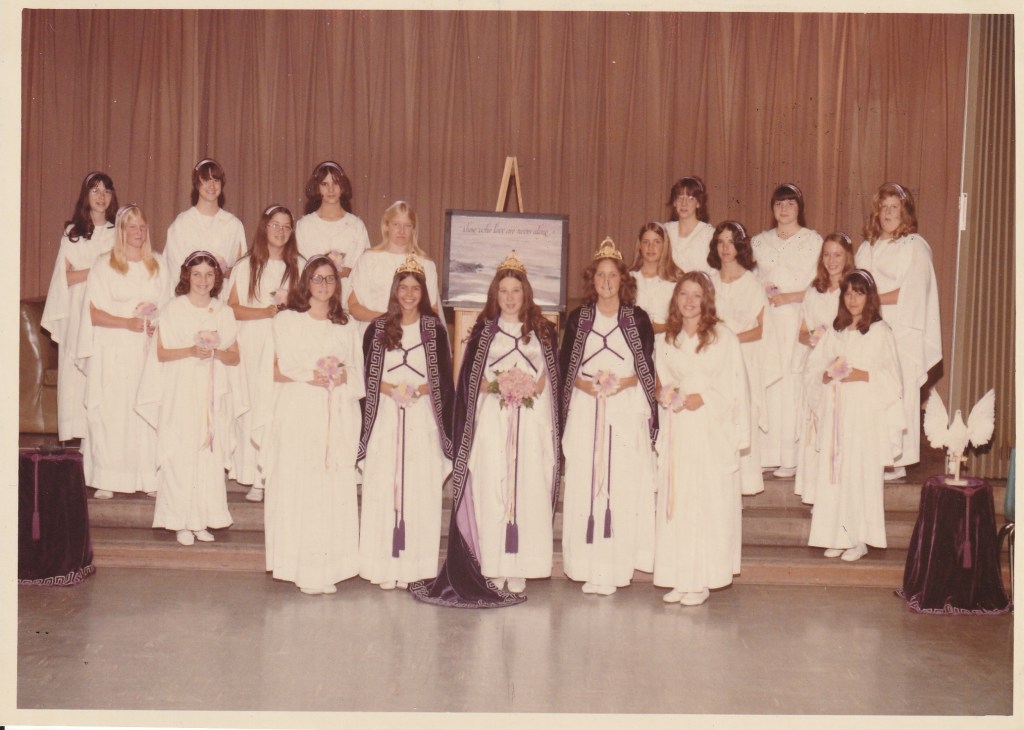
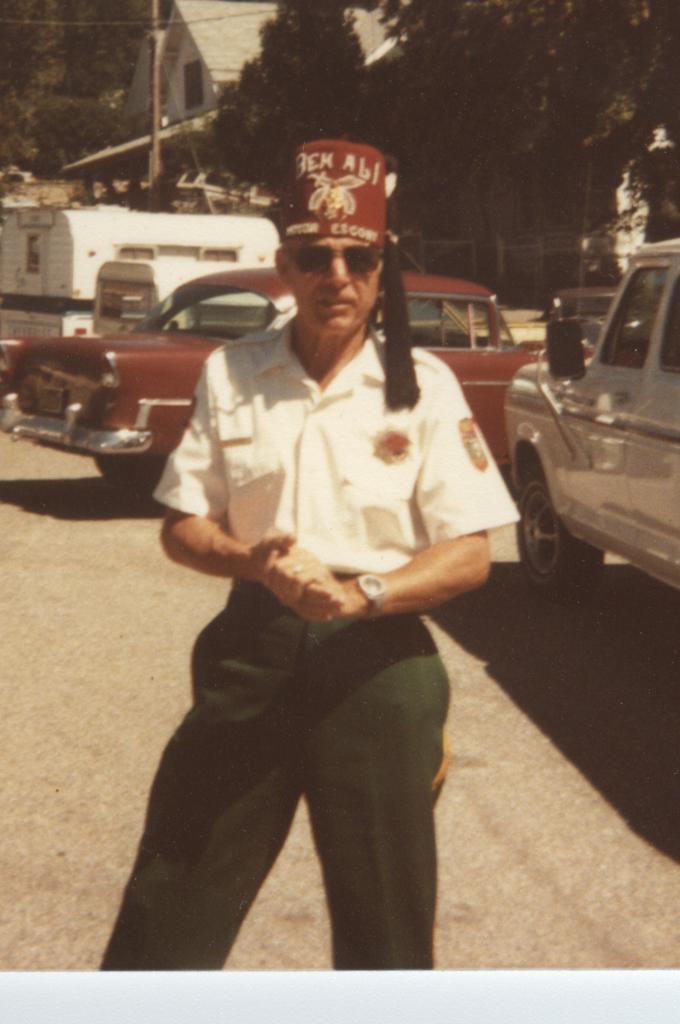
She did remember her grandpa riding a tiny motorcycle in parades, wearing a fez—but she had no idea what that was about. So I showed her the photos of her mom and me in our Job’s Daughters regalia.
I thought we looked like angels.
She thought we looked like a cult.
And in that moment, I realized how easily meaning can be lost when the stories behind the images aren’t told.
Then I asked my own son if he knew that his grandpa was a Mason and me a Job’s daughter. He knew about grandpa, but not about me. I really don’t think he knows what either of them really are.
That’s no one’s fault but mine. So this is for my Niece, my Son and my Granddaughters:
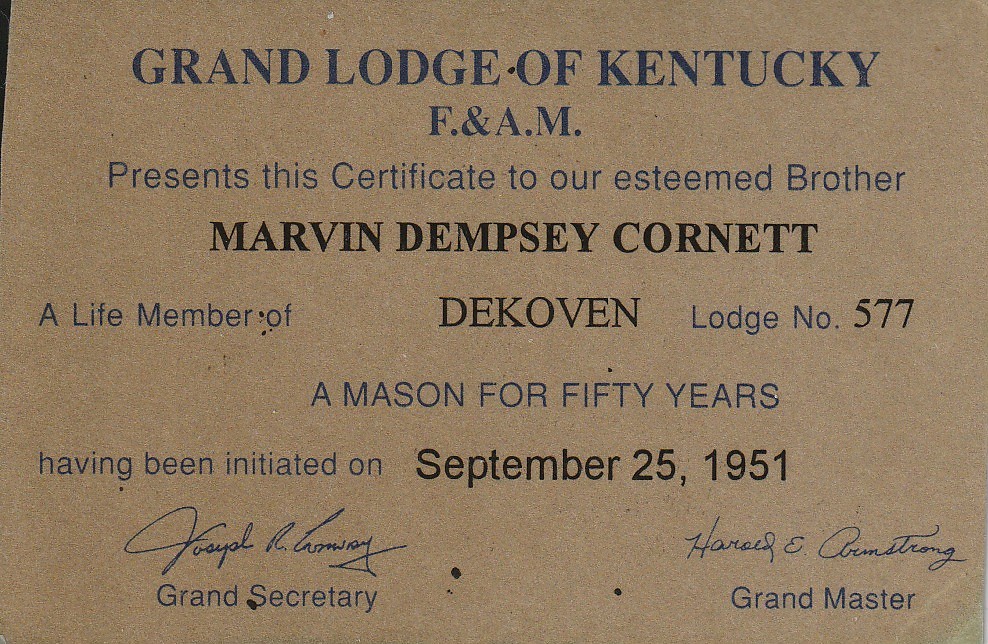
My father became a Mason in 1951—eight years before I was born.
By the time I arrived in 1959, his Masonry was already part of the background of his life. I remembered his fancy ring he wore with a strange symbol. He was a career Army man, a boy from the hollers of Eastern Kentucky. Being a Mason fit neatly into that larger identity of service and structure.
As a child, I don’t remember much about his Masonry at all. If you’d asked me then what a Mason was, I couldn’t have told you.
I didn’t begin to understand any of it until I was invited into something connected to that world myself.
When I was around 12, my father asked me if I would like to become a Job’s Daughter. I didn’t really know what it was, but when I saw the flowing white robes with wings, I thought they looked like angels. That was enough for me. I said yes.
What I didn’t realize was how serious—and how demanding—it would be.
Job’s Daughters required real commitment. Meetings, responsibilities, memorization, and discipline.
When I eventually became an officer—Chaplain—I was expected to memorize loooong ceremonial passages and stand in front of the entire Bethel (that’s what our chapters were called) to lead prayer and song. In other words, I opened the show and closed the show with stuff in the middle that I can’t remember.
I was thirteen years old-1974
And I was painfully shy.
There was no hiding in that role. No fading into the background. I had to speak clearly in the middle of the room. Lead confidently. Hold space for others. At first, it felt impossible. My hands shook. My voice wavered.
But I learned.
I memorized the words. I practiced until they lived in my body. I stood up straight even when I didn’t feel brave. Slowly—almost without noticing—I began to change.
Job’s Daughters pulled me out of my shell. It gave me my first real experience with public speaking, leadership, and responsibility. It taught me how to stand in front of people and be heard.
It’s a skill that stuck with me my entire life! I am thankful to have been a part of it.
My dad was a 32nd degree Mason. What exactly is that?
When I say my dad was a 32nd degree Mason, it sounds mysterious—maybe even a little dramatic. The truth is much less secretive and far more ordinary (and honorable).
Freemasonry is one of the oldest fraternal organizations in the world, with modern roots tracing back to 1717 in England, when local guilds formed what became known as Freemasonry. At its core, Masonry is about moral character, personal responsibility, service to others, and lifelong learning.
The word degree doesn’t mean rank or power. It’s more like levels of learning, similar to grade levels or stages of coursework. Each degree represents lessons taught through symbolism, ceremony, and reflection.
Most Masons start with the first three degrees—Entered Apprentice, Fellow Craft, and Master Mason. From there, some choose to continue their education through additional Masonic bodies. My father did that through the Scottish Rite, where degrees go from the 4th through the 32nd.
So what does 32nd degree actually mean?
It means commitment.
A 32nd degree Mason has spent years studying the principles of Masonry—things like integrity, service, justice, and compassion—and has shown dedication to living those values. It’s not about secrecy or status. It’s about personal growth and service over time.
My dad became a Mason in the middle of his Army career, which makes sense to me now. Masonry appealed to the same things the military did: structure, tradition, discipline, and service to something larger than oneself.
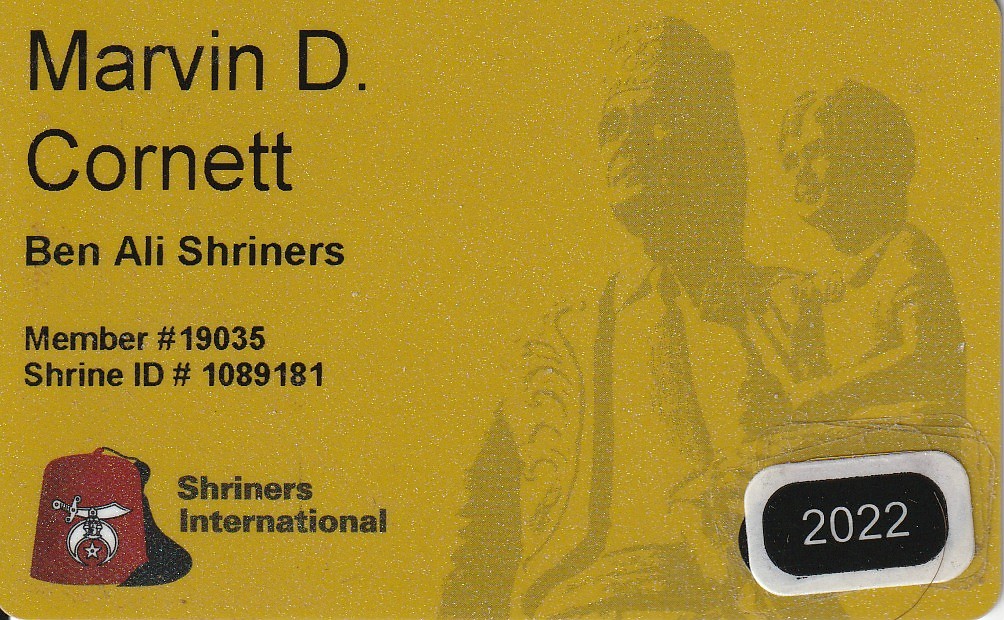
Later, he became a Shriner, a Masonic organization focused on charity—famous for the fez, the parades, and the little motorcycles, and deeply known for supporting children’s hospitals. (photo below) My sister now has the famous Fez, and boy does it sparkle!
So when I say my dad was a 32nd degree Mason, what I really mean is this:
He chose a path that valued service, character, and lifelong learning—and he stayed on it for the rest of his life.
What’s a Job’s Daughter—and Why the Weird Robes?
Job’s Daughters International is a leadership and service organization for girls and young women, connected to Freemasonry. We were typically a daughter or close relative of a Mason. Today all girls can join if they are sponsored by a Mason family and meet the age (10-20) and character requirements.
It was created to teach responsibility, service, confidence, and public speaking through tradition and ceremony.
And the robes?
They’re ceremonial, like choir robes or graduation gowns. Everyone wears the same thing so no one stands out—and so the focus stays on the role and the message, not appearances. The design comes from biblical symbolism meant to represent values like integrity, perseverance, and faith—not a specific religion.
To someone seeing them for the first time, the robes can look weird. But inside the organization, they weren’t about secrecy or mystery.
They were about stepping up, being seen, and learning how to lead.
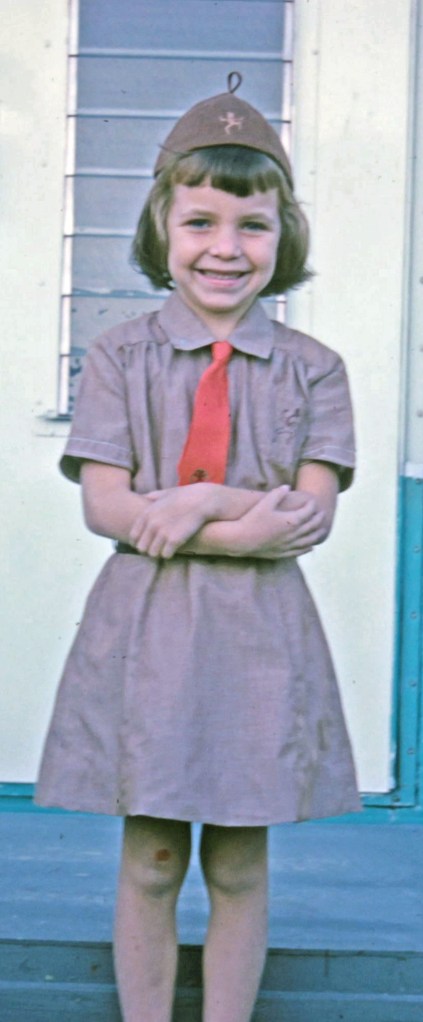
I loved the robe as much as I loved my Brownie uniform!
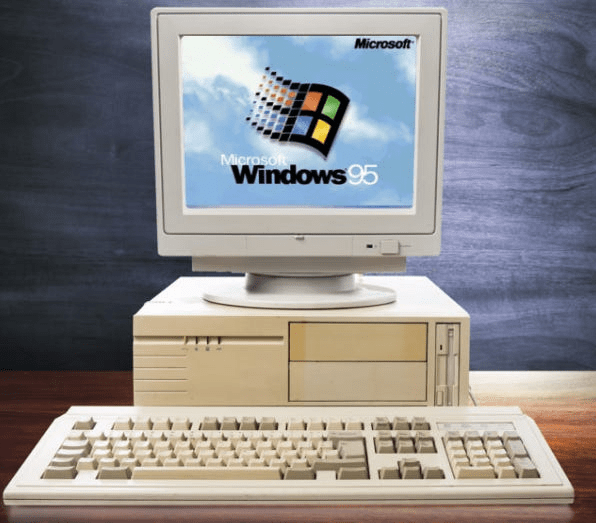
In 1997, I built my own website while living on a ranch, connected to the internet by a single dial-up phone line. I had no programming experience, didn’t know code, and barely knew how to use my PC! Windows was still fairly new, and I was migrating from DOS.
Old-timers will remember the terror: a black screen with nothing but a blinking cursor, a row of function keys you definitely weren’t supposed to press—and a few you were somehow expected to remember exactly what they did.
Getting online meant listening to that familiar screech of weird tones that went on forever and hoping no one picked up the phone in another room. If they did—connection lost, and yelling commenced.
I bought a book on how to make a website and learned HTML the only way available to me: pure stubbornness. There were no platforms or templates. I opened a plain text editor and typed everything by hand. Every paragraph, color, and line break had to be told exactly what to do. When something didn’t work, it simply didn’t show up. I had to figure out why all on my own!
Design was a workaround. Tables stood in for layout. Images were carefully resized so they wouldn’t take forever to load. That meant they had to be of very low resolution. Nothing was elegant, but when it worked, it felt like a small miracle.
And my site had movement (What??)
Flashing words. Simple animations. Photos of my ranch. Clickable flashing buttons.
By today’s standards, it was primitive. But in 1997, on a ranch with dial-up, it felt impressive. My friends couldn’t believe I had a website at all—let alone one that did things.
Publishing meant uploading files through FTP (File Transfer Protocal) software—photos and my HTML text file—dragging them from my computer into a place I barely understood. There was no undo. Every update replaced the last version completely. If I got it wrong, the site disappeared.
On a good day, it took over an hour to upload my website to the World Wide Web.
When I typed in the URL—some long, convoluted address with my name at the end—and the site appeared, I felt victorious. If it didn’t, I retraced every step, fixed what I could, and waited another hour or more for my site to upload again.
That internet was slow and unforgiving, but it was honest. If something existed, it was because I made it exist from scratch.
There was no publish or undo button—just patience-lots of it.
For today’s bloggers and creators: Before feeds and filters, we crossed the internet in covered wagons— uphill, both ways, buffering the whole time.
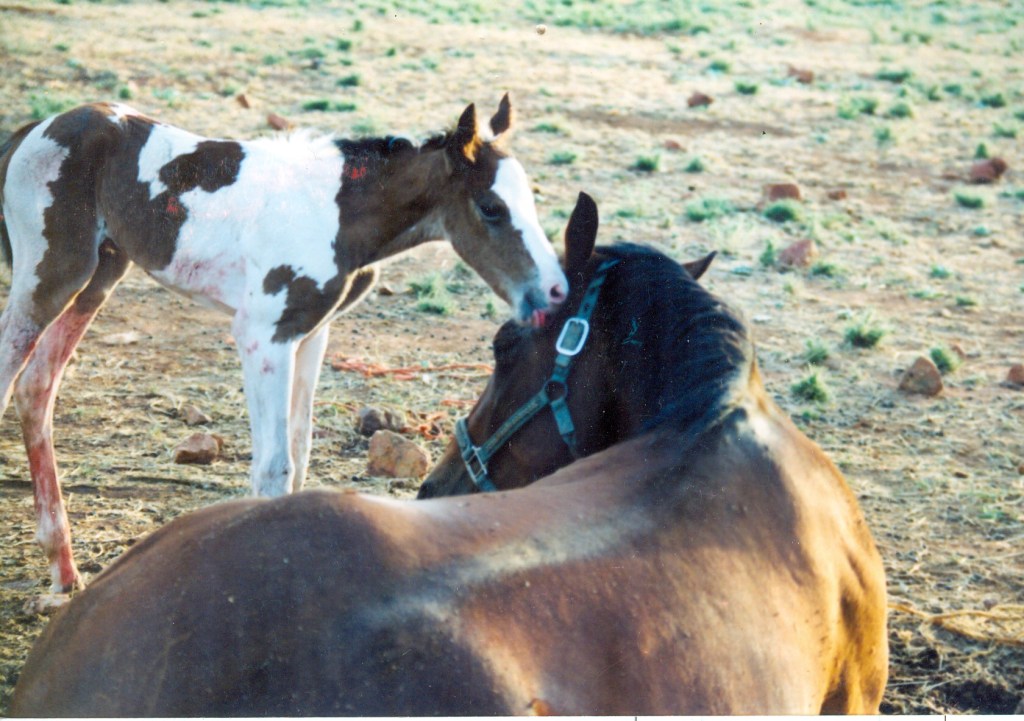
Whiskey, our beloved horse, was born on our ranch. She just celebrated her 22nd birthday this past week. I’ll never forget that day. As the time approached for the birth, I had kept her mom, “Ima,” in a cozy, straw-filled stall. One evening, I came home from work and thought I’d let Ima out of her stall to walk around the pasture and get some exercise. I walked back to the house and proceeded to fix dinner. Not fifteen minutes later, there was someone pounding on my front door! It was my neighbor telling me there was a paint baby standing in our pasture. Whiskey had arrived quickly in the early evening, which is unusual as horses typically prefer to give birth in the wee hours of the morning. She was stunning, with loud splashes of color.
Whiskey was meant to be my husband’s horse. He broke her himself, and together they had many adventures. As the other horses aged and went into retirement, I found myself no longer riding, and Whiskey wasn’t being ridden either. She was much too young to be retired and had many more years of adventures ahead. So, we made the hard decision to rehome her at age 18. She now has a fantastic home at a ranch where she and her new owner are winning prizes. It was the best decision we made for Whiskey. Eventually, over the next couple of years, all of our remaining horses, Ima, Oreo, and Buddy, were laid to rest in their 30s.
With all the horses gone, only Mija, the donkey, was left. We had adopted Mija from the Bureau of Land Managements Wild Burrow program back in 2001. She was totally wild but we got her tamed in just a few days. That’s how donkeys operate! She’s been a pasture pet ever since. When the last horse passed, she stood in the barn, staring at the house all day. She was so very lonely. Our neighbor across the road offered to take her, saying she could live her days with their horse and many goats. Mija is so happy now and acts as a protector of the goats. She won’t let any dogs into the pasture.
Both Whiskey and Mija are living their best lives with the best humans on the planet. I am forever grateful to Jackie Clemmers, Jeanne Walker, and Pam Lockrem for taking such good care of these two.
It was surreal to see all of my pastures and barn empty. No more daily feedings or filling up water buckets. It took me a few weeks to not automatically go out in the evening to feed and water. Now, my husband has to do all of the mowing.
Rehoming Whiskey and Mija was a difficult decision, but knowing they are happy and well-cared for makes it all worthwhile. The memories of our time with them are cherished, and I am comforted by the knowledge that they are living their forever best lives.
This post is part of my “Moving to New Mexico” Series. Go here to start from the beginning.
Don’t forget to enter your email to get alerts when I make a new post! YOU are THE BEST!
Whiskey about 15 minutes old!
Whiskey and Jackie winning buckles!
Mija feeling sad with Alex from the loss of all her buddies.
Mija with one of her goats at her new home. She’s shedding out her thick winter coat.
And so it begins… the purging of a 25-year life on a 12-acre ranch. When we bought the place in 2000, we had two horses and a dream. That dream, like our herd, eventually grew—to four horses, one donkey, two sheep, five dogs, and a boatload of barn cats that kept mysteriously disappearing (cue Wile E. Coyote). We poured blood, sweat, and more money than we care to admit into home improvements, barns, fencing—only to find that they often needed repairing or replacing. It seemed to be a never-ending task, but every minute of country living was worth it. City life just wasn’t in our blood any longer, replaced instead by a mix of hay, dirt, rattlesnakes, and the occasional whiff of manure.
Fast forward 25 years, and with all the animals either having passed on or been re-homed (our beloved donkey and one horse are now living their best retirement lives on amazing ranches), it’s time to bid farewell to our rustic paradise and find a new adventure. We’ve decided that this new chapter will unfold in the northern part of New Mexico, likely between Albuquerque (took me a while to learn how to spell that) and Santa Fe. Our next home might have less fencing to mend and fewer barns to build, but it promises new memories.
As we pack up (and purge) our lives, we’ve discovered that humor is our best packing companion. Each item we box up brings a memory, a laugh, and many “Do I really need this” questions. The process is chaotic, but it’s also a reminder of all the joy, hard work, and love we’ve poured into a small slice of heaven in the windy grasslands. While we’re excited about our new adventure, we’ll carry a piece of this ranch—and all its quirks and joys—with us. Here’s to new beginnings. I hope to capture the process of all the stuff that has yet to be done to get this ranch on the market and all that entails! D-Day to market is December 1. We got this. (I think)






Leave a Reply