On this weeks adventure, we took a day trip to Las Vegas New Mexico. It’s about an hour and 45 minutes from our house and the scenery along the way was amazing! The landscape in New Mexico changes so dramatically around every turn in the road!
We also took a last minute 13 mile detour to check out a state park. We are so glad we did. The ancient towns we saw along the way was a trip through time and completely caught us by surprise! Sometimes these little last minute detours are sooo worth it. The road travels along the Pecos river and was once part of the Santa Fe trail. The Pecos River is 960 miles long and the camp grounds at the park are right on the river. We made our reservations go to camping there in May! Stay tuned for that video!
I’ve been an entertainer my entire life—one way or another.
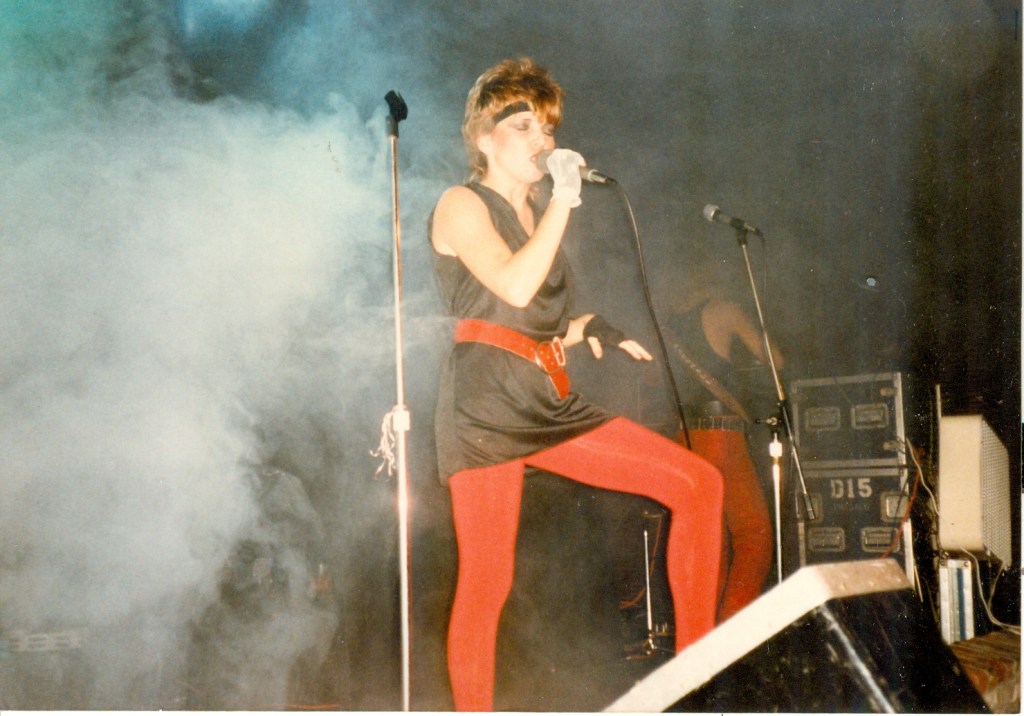
It started when I was seven years old, putting on backyard circuses with my friends while our parents and neighbors sat politely in lawn chairs, pretending we were spectacular. From there, it turned into choir from ages nine to fourteen, then professional bands at sixteen, and eventually decades of professional singing that carried me well into my fifties.
Along the way, I even spent twelve years as a radio DJ—but that’s a story for another blog post.
I stopped singing professionally at fifty-five because my vocal cords simply stopped cooperating. Age has a way of shaking things up whether we’re ready or not. I couldn’t hit those high Ann Wilson power notes anymore. Not only could I not hit them—it hurt. And if you’ve noticed, Ann can’t hit her famous notes anymore either.
But we don’t stop!
Why? Because it’s our identity! Something we believe we were put on this Earth to do!
I sang in tiny, forgettable bars and on big, unforgettable stages. I toured. I opened a show for James Brown’s Grammy Celebration in Los Angeles—his annual industry-only event filled with the who’s who of R&B. A dream come true. And damn, back then I could belt those insane high notes straight from my chest.
Then one day… I couldn’t.
And it crushed me.
I threw myself a full-blown pity party. My voice was gone—and it felt like I was gone too. On top of that, I felt invisible. Like I was fading out. And I wasn’t ready for that. I was too young to disappear.
So I did something desperate and hopeful all at once: I paid $500 for one singing lesson with a renowned vocal coach in New York.
One hour. That’s all it took.
He told me the truth—my vocal cords were thinning with age, and there was nothing I could do about that. But there was something I could do about how I sang. I needed to sing softer. I could still hit high notes, but I’d need to use my falsetto.
Back in the day, falsetto was considered cheating.
That day, I was given permission to cheat.
He taught me how to use breath to make falsetto stronger—not airy—so it could approximate that powerful chest voice I used to rely on. Think Ann Wilson in her glory days singing Barracuda or Crazy on You—pure chest voice. I couldn’t do that anymore. But I could do this.
And that changed everything.
Losing My Identity
Here’s the hard truth: when you lose your identity, it can feel like you’re just waiting to die. At least, that’s how it felt to me.
So I turned to YouTube.
I sat on my couch with my guitar and sang into the camera. I uploaded videos knowing maybe twenty or thirty people would watch. And I was grateful for every single one of them. They showed up. They witnessed me. They allowed me to let the creativity that had been trapped inside my body finally come out.
That mattered more than views or numbers.
I was singing on my terms—with the vocal cords I now have.
Today, my stage is the high desert.
I created a channel called High Desert Reflections. It’s just me—singing a few bars of a song, then sharing reflections from sixty-six years of living and what I’ve learned along the way.
So here’s my invitation to you:
Think about an identity you believe you’ve lost.
Maybe the new version looks like writing a book filled with your experiences. Maybe it’s slowing down. Maybe it’s a 2.0 version of who you used to be.
Dealer’s choice.
Just don’t lose your identity—revise it – Change the Key so it fits who you are now.
Taos Pueblo is one of the oldest continuously inhabited communities in North America — and it is still home to families today.
This video is a quiet walk through the pueblo, observing its adobe architecture, San Geronimo Church, Red Willow Creek, and the Sangre de Cristo Mountains rising behind it.
Designated a UNESCO World Heritage Site, Taos Pueblo is a living community, not a museum. Traditions, ceremonies, and daily life continue here much as they have for over a thousand years.
Filmed respectfully and intentionally, this video is meant to be experienced slowly.
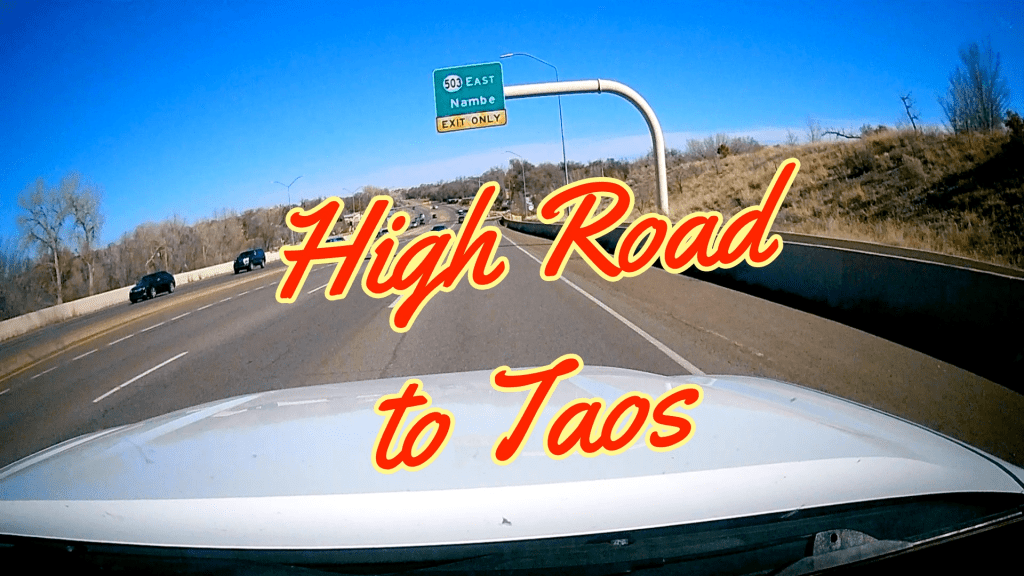
This high-speed dash cam journey follows New Mexico’s High Road to Taos, passing through ancient Spanish land-grant villages, quiet mountain roads, and some of the most beautiful historic adobe churches in the Southwest. With the Sangre de Cristo mountains as a backdrop, the drive is a must-do if visiting New Mexico!
Many of the villages along the High Road to Taos began as Spanish land-grant settlements in the 1600s–1800s, when Spain (and later Mexico) granted land to families and communities to encourage settlement in what is now northern New Mexico. The original direct Spanish descendants live there today.
Our drive ends at Taos Pueblo, one of the oldest continuously inhabited communities in North America. They speak the Traditional New Mexican Spanish. It’s a unique, 400 year old dialect only spoken in Northern New Mexico and Southern Colorado. It originated from the 16th century Spanish Settlers, Indigenous influences and subsequent isolation.
Discover Origami in the Garden, one of New Mexico’s hidden gems, located near Los Cerrillos, NM on the Turquoise Trail, where large-scale metal origami sculptures are s placed throughout otherworldly rock formations. 🌸 This outdoor art experience blends nature, creativity, and New Mexico’s unique landscape, creating a peaceful and visually stunning destination that many visitors overlook. 👉 Watch until the end for our special surprise encounter! 📍 Location: Near Los Cerrillos, New Mexico 🎨 Features: Monumental origami sculptures, garden paths, red rock formations https://origamiinthegarden.com/
Coming from living at 300 feet above sea level in California to 6850 feet above sea level in New Mexico had it’s challenges at first. I had a little bit of altitude sickness (headache, no appetite and lethargy for the first week, but I adjusted slowly. Riding my bike uphill to the mailbox was a bitch but I did it daily to get those red blood cells built up! But, since I’m already half way there, why not go up a little further? Just 35 minutes from my house, the mountains rise to over 10K feet! Let’s go check it out, shall we?
My time is getting short in California! In between all of the house projects for the upcoming sale of the ranch and move to New Mexico, I’m trying to find some time to get Sierra hiking in. Here is a trail near South Lake Tahoe that I haven’t done before! This trail is considered moderate at 7.2 miles round trip and 1300 feet of elevation gain, but you are rewarded a nice cool lake to take a dip!
And so it begins… the purging of a 25-year life on a 12-acre ranch. When we bought the place in 2000, we had two horses and a dream. That dream, like our herd, eventually grew—to four horses, one donkey, two sheep, five dogs, and a boatload of barn cats that kept mysteriously disappearing (cue Wile E. Coyote). We poured blood, sweat, and more money than we care to admit into home improvements, barns, fencing—only to find that they often needed repairing or replacing. It seemed to be a never-ending task, but every minute of country living was worth it. City life just wasn’t in our blood any longer, replaced instead by a mix of hay, dirt, rattlesnakes, and the occasional whiff of manure.
Fast forward 25 years, and with all the animals either having passed on or been re-homed (our beloved donkey and one horse are now living their best retirement lives on amazing ranches), it’s time to bid farewell to our rustic paradise and find a new adventure. We’ve decided that this new chapter will unfold in the northern part of New Mexico, likely between Albuquerque (took me a while to learn how to spell that) and Santa Fe. Our next home might have less fencing to mend and fewer barns to build, but it promises new memories.
As we pack up (and purge) our lives, we’ve discovered that humor is our best packing companion. Each item we box up brings a memory, a laugh, and many “Do I really need this” questions. The process is chaotic, but it’s also a reminder of all the joy, hard work, and love we’ve poured into a small slice of heaven in the windy grasslands. While we’re excited about our new adventure, we’ll carry a piece of this ranch—and all its quirks and joys—with us. Here’s to new beginnings. I hope to capture the process of all the stuff that has yet to be done to get this ranch on the market and all that entails! D-Day to market is December 1. We got this. (I think)
When my fashion designer sister got the call to make masks, she immediately went to work to produce thousands! She is currently shipping hundreds of masks to the Navajo Nation. Here is her story (filmed me)


 twylaworld.com
Leave a comment