
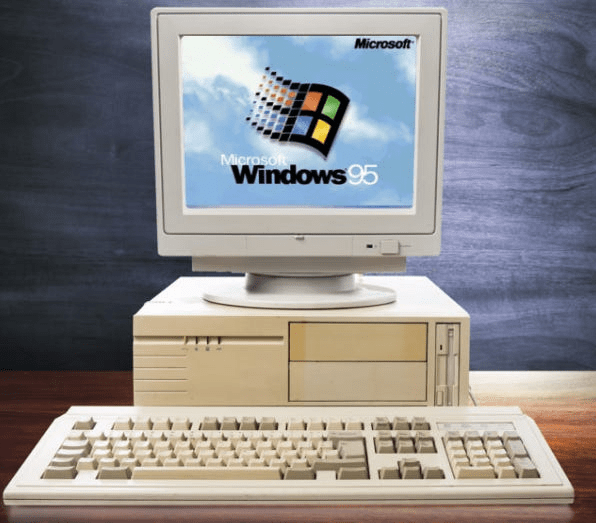
In 1997, I built my own website while living on a ranch, connected to the internet by a single dial-up phone line. I had no programming experience, didn’t know code, and barely knew how to use my PC! Windows was still fairly new, and I was migrating from DOS.
Old-timers will remember the terror: a black screen with nothing but a blinking cursor, a row of function keys you definitely weren’t supposed to press—and a few you were somehow expected to remember exactly what they did.
Getting online meant listening to that familiar screech of weird tones that went on forever and hoping no one picked up the phone in another room. If they did—connection lost, and yelling commenced.
I bought a book on how to make a website and learned HTML the only way available to me: pure stubbornness. There were no platforms or templates. I opened a plain text editor and typed everything by hand. Every paragraph, color, and line break had to be told exactly what to do. When something didn’t work, it simply didn’t show up. I had to figure out why all on my own!
Design was a workaround. Tables stood in for layout. Images were carefully resized so they wouldn’t take forever to load. That meant they had to be of very low resolution. Nothing was elegant, but when it worked, it felt like a small miracle.
And my site had movement (What??)
Flashing words. Simple animations. Photos of my ranch. Clickable flashing buttons.
By today’s standards, it was primitive. But in 1997, on a ranch with dial-up, it felt impressive. My friends couldn’t believe I had a website at all—let alone one that did things.
Publishing meant uploading files through FTP (File Transfer Protocal) software—photos and my HTML text file—dragging them from my computer into a place I barely understood. There was no undo. Every update replaced the last version completely. If I got it wrong, the site disappeared.
On a good day, it took over an hour to upload my website to the World Wide Web.
When I typed in the URL—some long, convoluted address with my name at the end—and the site appeared, I felt victorious. If it didn’t, I retraced every step, fixed what I could, and waited another hour or more for my site to upload again.
That internet was slow and unforgiving, but it was honest.
If something existed, it was because I made it exist from scratch.
There was no publish or undo button—just patience-lots of it.
For today’s bloggers and creators:
Before feeds and filters, we crossed the internet in covered wagons—
uphill, both ways, buffering the whole time.
 twylaworld.com
You must be logged in to post a comment.