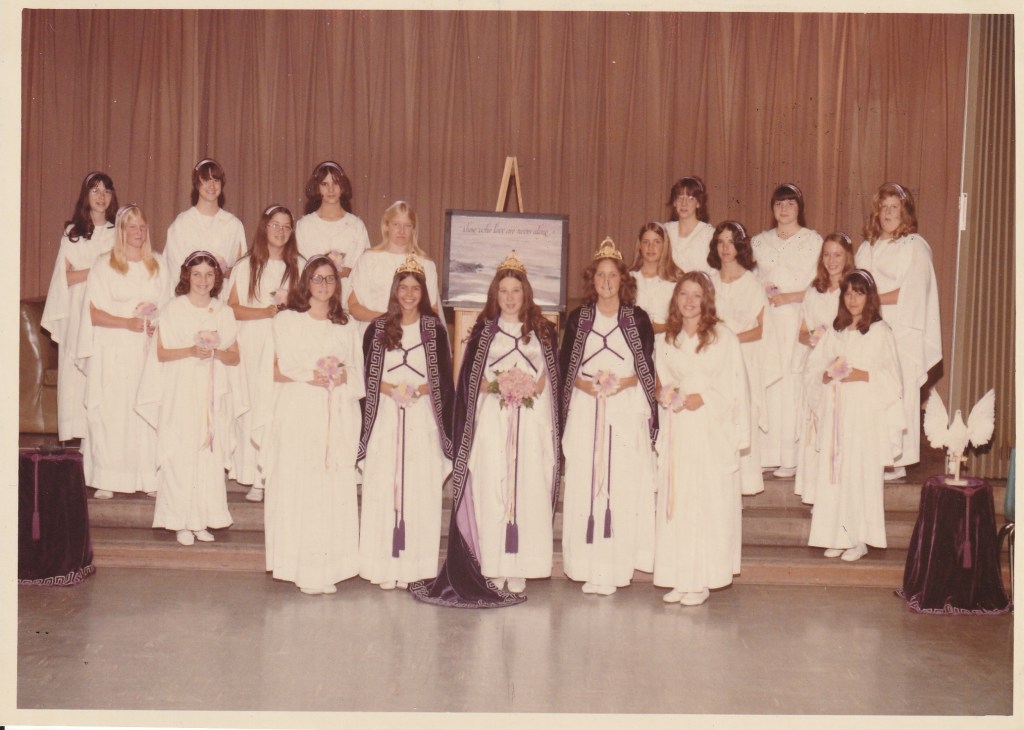
Recently, during a conversation about family history, I mentioned to my niece that her mother and I had both been Job’s Daughters.
“What’s that?” she asked.
I found myself struggling to explain it—trying to give an elevator speech about a complex organization that’s been around since 1717. I told her it was a leadership and service organization for girls, connected to the Masons, which her grandfather had been a lifetime member of.
She had no idea what a Mason was either.
She did remember her grandpa riding a tiny motorcycle in parades, wearing a fez—but she had no idea what that was about. So I showed her the photos of her mom and me in our Job’s Daughters regalia.
I thought we looked like angels.
She thought we looked like a cult.
And in that moment, I realized how easily meaning can be lost when the stories behind the images aren’t told.
Then I asked my own son if he knew that his grandpa was a Mason and me a Job’s daughter. He knew about grandpa, but not about me. I really don’t think he knows what either of them really are.
That’s no one’s fault but mine. So this is for my Niece, my Son and my Granddaughters:
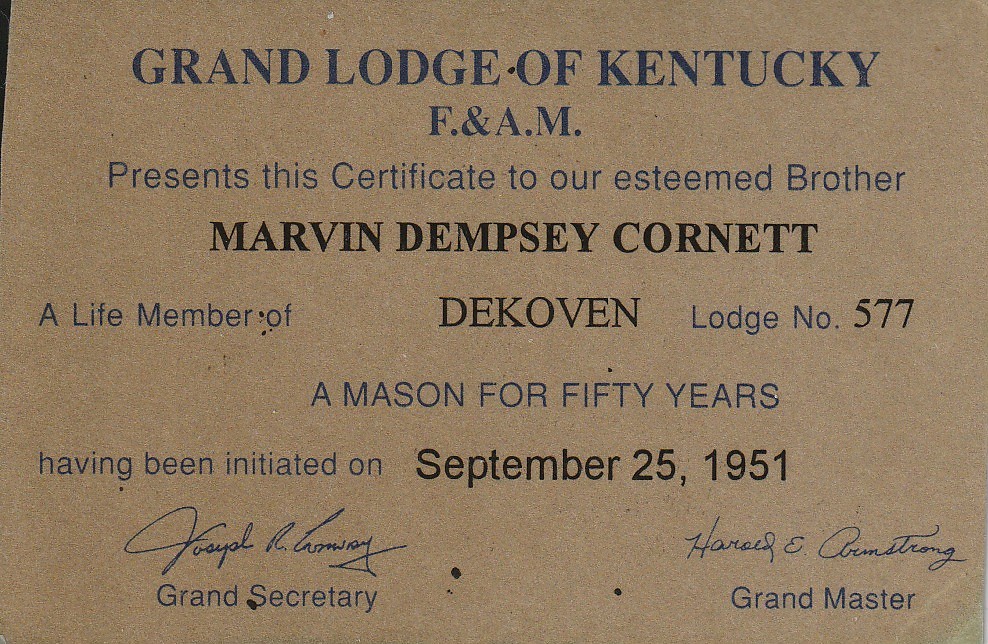
My father became a Mason in 1951—eight years before I was born.
By the time I arrived in 1959, his Masonry was already part of the background of his life. I remembered his fancy ring he wore with a strange symbol. He was a career Army man, a boy from the hollers of Eastern Kentucky. Being a Mason fit neatly into that larger identity of service and structure.
As a child, I don’t remember much about his Masonry at all. If you’d asked me then what a Mason was, I couldn’t have told you.
I didn’t begin to understand any of it until I was invited into something connected to that world myself.
When I was around 12, my father asked me if I would like to become a Job’s Daughter. I didn’t really know what it was, but when I saw the flowing white robes with wings, I thought they looked like angels. That was enough for me. I said yes.
What I didn’t realize was how serious—and how demanding—it would be.
Job’s Daughters required real commitment. Meetings, responsibilities, memorization, and discipline.
When I eventually became an officer—Chaplain—I was expected to memorize loooong ceremonial passages and stand in front of the entire Bethel (that’s what our chapters were called) to lead prayer and song. In other words, I opened the show and closed the show with stuff in the middle that I can’t remember.
I was thirteen years old-1974
And I was painfully shy.
There was no hiding in that role. No fading into the background. I had to speak clearly in the middle of the room. Lead confidently. Hold space for others. At first, it felt impossible. My hands shook. My voice wavered.
But I learned.
I memorized the words. I practiced until they lived in my body. I stood up straight even when I didn’t feel brave. Slowly—almost without noticing—I began to change.
Job’s Daughters pulled me out of my shell. It gave me my first real experience with public speaking, leadership, and responsibility. It taught me how to stand in front of people and be heard.
It’s a skill that stuck with me my entire life! I am thankful to have been a part of it.
My dad was a 32nd degree Mason. What exactly is that?
When I say my dad was a 32nd degree Mason, it sounds mysterious—maybe even a little dramatic. The truth is much less secretive and far more ordinary (and honorable).
Freemasonry is one of the oldest fraternal organizations in the world, with modern roots tracing back to 1717 in England, when local guilds formed what became known as Freemasonry. At its core, Masonry is about moral character, personal responsibility, service to others, and lifelong learning.
The word degree doesn’t mean rank or power. It’s more like levels of learning, similar to grade levels or stages of coursework. Each degree represents lessons taught through symbolism, ceremony, and reflection.
Most Masons start with the first three degrees—Entered Apprentice, Fellow Craft, and Master Mason. From there, some choose to continue their education through additional Masonic bodies. My father did that through the Scottish Rite, where degrees go from the 4th through the 32nd.
So what does 32nd degree actually mean?
It means commitment.
A 32nd degree Mason has spent years studying the principles of Masonry—things like integrity, service, justice, and compassion—and has shown dedication to living those values. It’s not about secrecy or status. It’s about personal growth and service over time.
My dad became a Mason in the middle of his Army career, which makes sense to me now. Masonry appealed to the same things the military did: structure, tradition, discipline, and service to something larger than oneself.
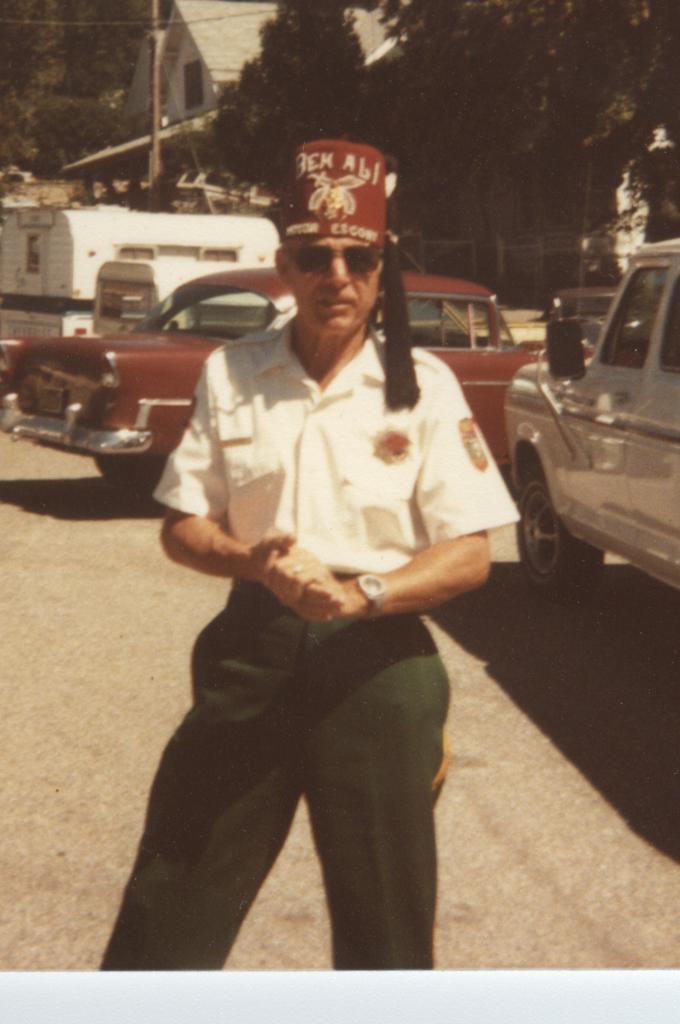
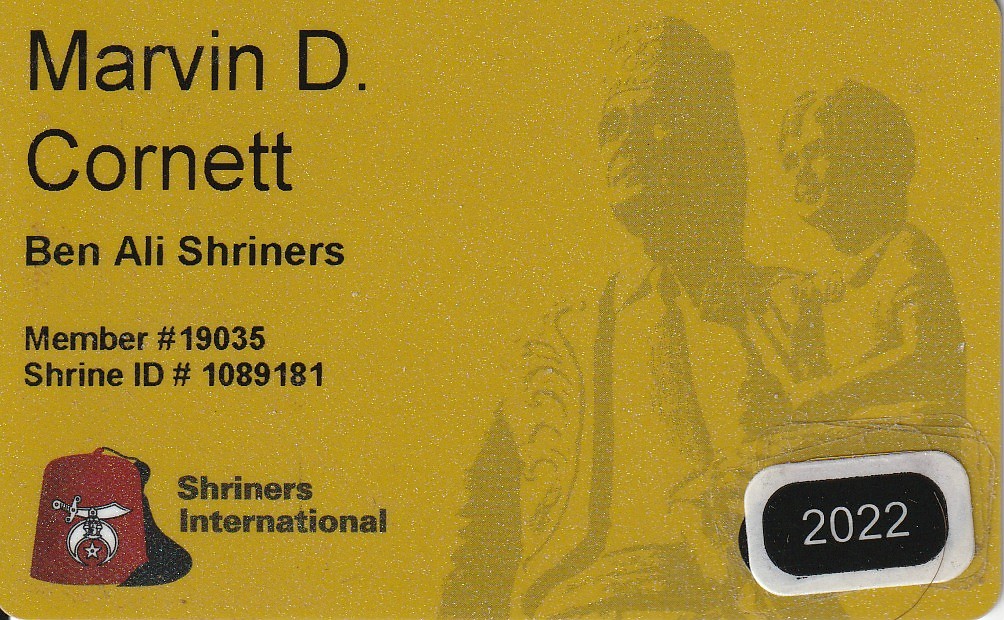
Later, he became a Shriner, a Masonic organization focused on charity—famous for the fez, the parades, and the little motorcycles, and deeply known for supporting children’s hospitals. (photo below) My sister now has the famous Fez, and boy does it sparkle!
So when I say my dad was a 32nd degree Mason, what I really mean is this:
He chose a path that valued service, character, and lifelong learning—and he stayed on it for the rest of his life.
What’s a Job’s Daughter—and Why the Weird Robes?
Job’s Daughters International is a leadership and service organization for girls and young women, connected to Freemasonry. We were typically a daughter or close relative of a Mason. Today all girls can join if they are sponsored by a Mason family and meet the age (10-20) and character requirements.
It was created to teach responsibility, service, confidence, and public speaking through tradition and ceremony.
And the robes?
They’re ceremonial, like choir robes or graduation gowns. Everyone wears the same thing so no one stands out—and so the focus stays on the role and the message, not appearances. The design comes from biblical symbolism meant to represent values like integrity, perseverance, and faith—not a specific religion.
To someone seeing them for the first time, the robes can look weird. But inside the organization, they weren’t about secrecy or mystery.
They were about stepping up, being seen, and learning how to lead.
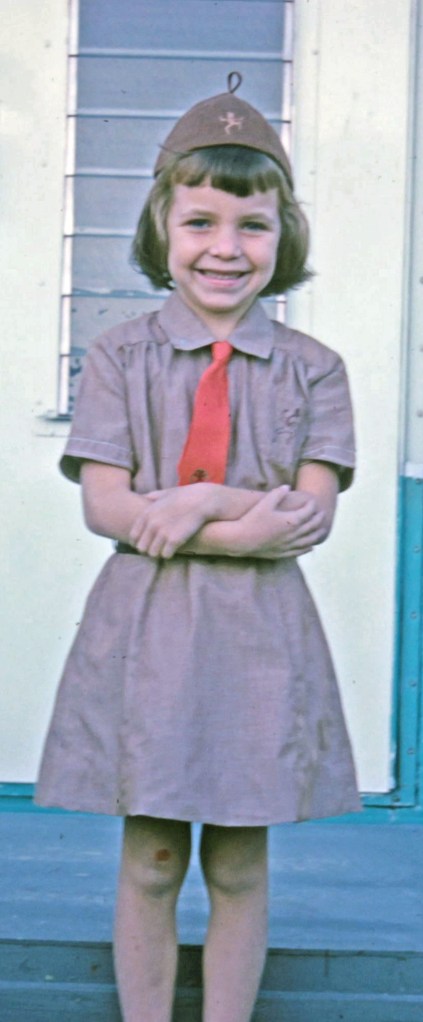
I loved the robe as much as I loved my Brownie uniform!