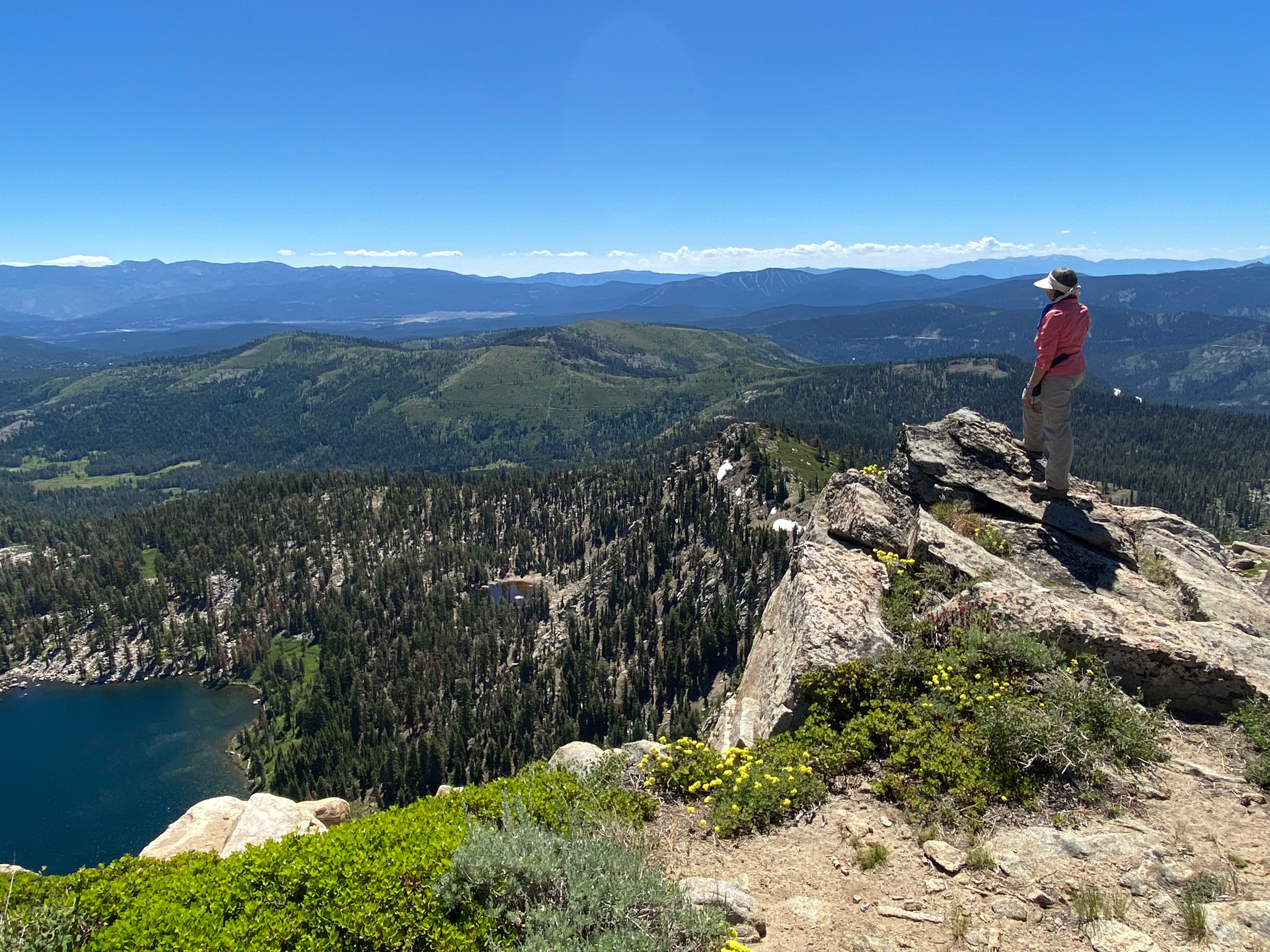
I still remember the first time I hiked toward Frog Lake Overlook in the Sierra of Northern California.
It was summer. Blue sky. Warm sun. Wildflowers scattered along the trail like confetti. And even then — even in perfect weather — it wasn’t easy. The trail climbed steadily, the air thinned, and the slopes around felt big and exposed. It was hot, and I got overheated. At one point I honestly didn’t think I’d make it to the top, but I pushed forward.
I stopped more than once, hands on my hips, catching my breath and looking up at those towering ridgelines, thinking: This place is beautiful… but it’s serious. No joke.
In winter, that same beauty becomes something entirely different. Those open slopes fill with deep snow. Terrain that feels challenging in July turns avalanche-prone and unforgiving. It’s why the area is beloved by experienced backcountry skiers — and why it demands careful judgment every single time.
This week, that place took nine lives.
And I can’t stop thinking about how easily excitement, planning, and commitment can blur the most important decision we ever make outdoors: whether to go at all.
My husband was a private pilot for many years, and aviation teaches this lesson brutally and early. There’s a phrase pilots use: “get-there-itis.”
You plan the trip. Check the weather — all good. Drive to the airport. Then conditions change. You see holes in the clouds and start wondering: Can I get above this? Will it clear… or close in?
We’ve waited it out. We’ve diverted. We’ve cancelled entirely and driven home.
Because experienced pilots know something simple and hard:
The safest flight is the one you don’t take.
“Get-there-itis” kills pilots every year.
And sometimes, it shows up in the mountains too.
Forecasts had warned that the Sierra was about to be hammered with massive snowfall — feet upon feet in a very short time. Anyone familiar with the range knows what that means: unstable snowpack, hidden weak layers, and avalanche danger that escalates fast.
The Frog Lake huts are booked far in advance are NOT cheap and often more than a year out, with strict cancellation policies. That kind of reservation can quietly add pressure. After waiting that long, it’s human to feel like you have to go.
But mountains don’t honor reservations.
My perspective, from someone familiar with the area:
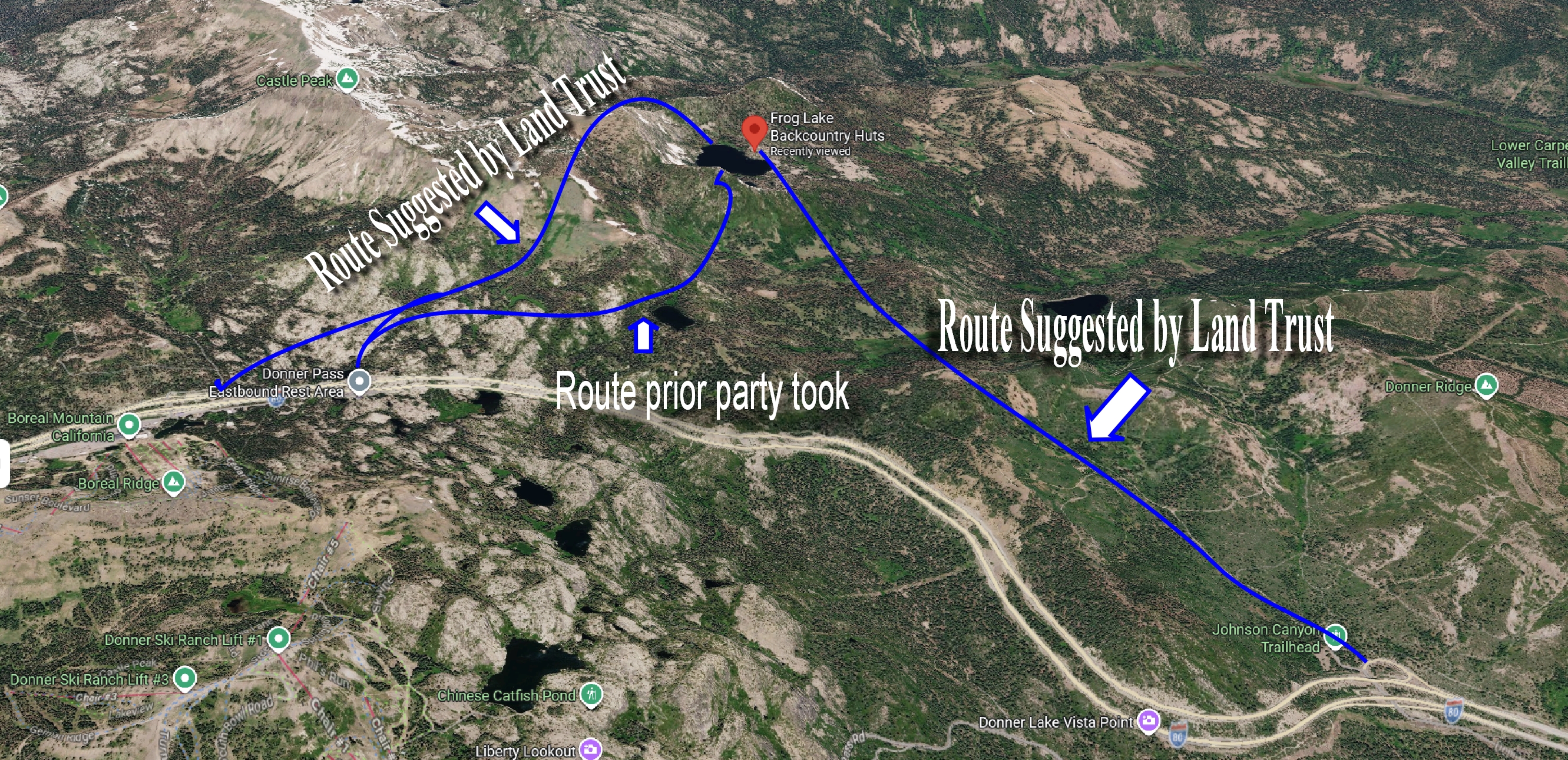
There are three routes out from the huts according to the Land Trust Website. Two of them cross the steep, avalanche-prone saddle, leading toward parking areas near I-80 and the Castle Peak trailhead — less than half a mile apart. Another option heads east along the flatter service road and heads east towards the Truckee area. Or, another option not mentioned by the Trust, is to cut over towards Summit Lake. With some backcountry navigation, that route can also be used to loop back toward the trailhead. In fact, another party reportedly used that approach to avoid the avalanche-prone saddle.
The huts themselves are modern, heated, and staffed with a full-time caretaker. Staying put could potentially have allowed rescuers to reach the group more safely once conditions improved. Skiing out over that saddle — especially during or just after a major storm — would be extremely dangerous. Also, the storm was raging and they were at risk of dying from exposure!
Of course, that’s easy for me to say from the comfort of home. I’m a backcountry hiker, not a backcountry skier. But I’ve done enough snowshoeing in that area to know how serious those winter conditions can be.
The Routes Suggested by the Tahoe Land Trust
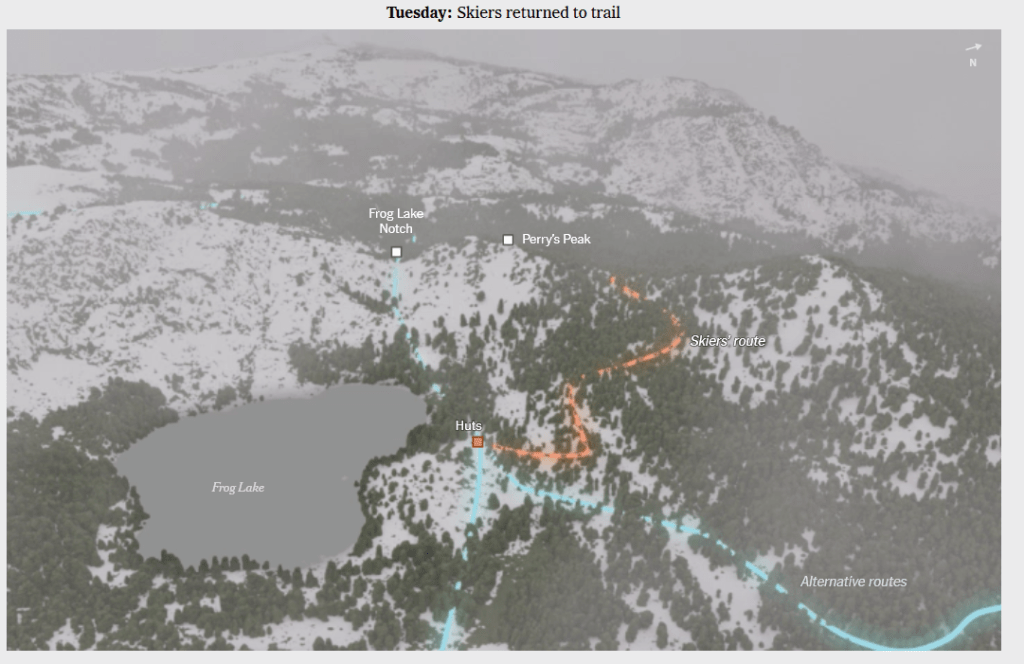
UPDATE: According to the New York Times Interview with survivors, the party took a whole other route as indicated below. This route took them directly under Perry’s Peak where the avalanche too place. (orange line) The regular route would have been Frog Lake Notch where they came in two days prior, but the guides decided not to use that route.
What we do know is what followed.
Search-and-rescue crews had to enter whiteout conditions and severe avalanche danger to reach the survivors. For hours, rescuers put their own lives on the line in terrain that was actively unstable. That’s what these teams do — but every risky decision in the backcountry ripples outward, placing others in harm’s way too.
This isn’t about pointing fingers. It’s about recognizing something deeply human.
We all feel the pull to keep going. To finish what we started. To not waste the opportunity.
But experience — real experience — teaches a quieter truth:
Turning back isn’t failure. Waiting isn’t weakness. Cancelling isn’t defeat.
Sometimes it’s:
The decision to stay in the hut and wait it out. The willingness to cancel the trip altogether.
I think back to the summers of hiking to Frog Lake — the sunlight, the wildflowers, the sheer effort it took even in calm conditions — and this week’s loss feels even heavier.
Nine families are now living with the reality that the mountain will always be there…
…but their loved ones aren’t.
If there’s anything this tragedy leaves us with, it’s this:
The wilderness rewards skill and preparation. But it demands humility.
And sometimes the most experienced thing we can do is listen when the mountain says no.
—
Stay safe out there. The mountains are calling… but sometimes it’s best not to answer.
My Quest for Native American Ancestry Began with a Photograph
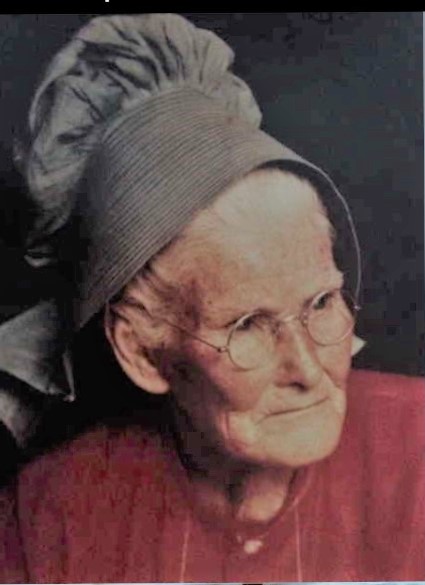
My quest to learn more about my ancestors began with a photograph of my great-grandmother that appeared in a newspaper sometime in the late 1940s. The image was captioned simply: “Lady in a Sun Bonnet.”
The accompanying article read:
“The pioneer Kentucky mountain families of the Cornetts and Isons gathered recently for a reunion along Leatherwood Creek in Perry County. One of the most striking persons present was Mrs. Polly Ann Cornett. Her snow-white hair was accentuated by a bright red waist. Her love for red, she explained, was inherited from Indian ancestry. Her paternal grandfather was Indian. She recalled that her brother always wore a red necktie. Her brother is Hiram Brock, a state senator and political leader in Eastern Kentucky for many years.”
Indian ancestry?
This was the first I had ever heard of it.
So I asked my dad.
“Oh yeah,” he said casually. “We have some Indian blood in the family.”
That was pretty much the extent of what anyone seemed to know.
At the time, all I really understood about my family tree was that my dad was born and raised in Eastern Kentucky—Harlan County—and my mom was born in Oklahoma. I had red hair, blue eyes, freckles, and very fair skin. My mom had blondish hair, blue eyes, and fair skin. My dad had black hair, blue eyes, and tanned easily.
Long before DNA testing was a thing, I began researching my dad’s side of the family the old-fashioned way. I eventually traced his lineage back to a Cherokee chief named Chief Red Bird, who would be my fifth great-grandfather. But the Native blood went back even further than that.
In the early frontier days, it was not uncommon for settlers—often mountain men—to take Native wives. Over generations, that bloodline eventually culminated with Red Bird. From there, as families moved out of the Kentucky hollers and intermarried, the ancestry became increasingly European.
Years later, when online DNA testing became readily available, I had my dad—at 99 years old—spit into a 23andMe tube. The results showed 2% Indigenous ancestry. Through additional research, I also found Shoshone ancestry in the mix.
I solved one family mystery but learned about another tribe where my DNA is the strongest.
The Celts
The Celts, much like Native Americans, were peoples who were tribal in structure—bound by clans, kinship, land, and oral history. Peoples whose spiritual traditions were ancient, whose ceremonies and beliefs stretched back thousands of years bound by nature.
The Erasure
Long before the colonization of the Americas, England had already honed its appetite for conversion at home. Celtic peoples in Ireland, Scotland, and Wales were targeted not just for their land, but for their beliefs. Conversion was framed as salvation, but it functioned as control. Oral traditions were discouraged or destroyed, sacred sites were repurposed, clan systems were dismantled, and spiritual practices were labeled pagan, savage, or uncivilized—language later reused almost verbatim in the New World. Celtic children were taught that their native tongues were backward or shameful, a strategy later replicated almost exactly in Native American boarding schools. When a language is erased, so too are the stories, ceremonies, and meanings that cannot be translated.
Much of the Celtic tribal belief system was lost—not because it was primitive or weak, but because it was deliberately dismantled through conquest, forced conversion, and the erasure of oral tradition. What remains are fragments: folklore, language, seasonal customs, and a lingering sense of belonging to land and kin—echoes of what once was whole.
Christianity was the primary tool used to justify cultural erasure, but the driving force was political control. Conversion wasn’t only about faith; it was about obedience. Indigenous belief systems—Celtic and Native alike—were deeply tied to land, kinship, and autonomy. By replacing those systems with Christianity, empires weakened tribal authority, disrupted oral traditions, and made people easier to govern. The church and the state worked hand in hand: religion supplied the moral justification, while empire reaped the land, labor, and loyalty.
Native peoples of the Americas, despite immense pressure and violence, managed to preserve far more of their living traditions – albeit through oppression and loss. And perhaps that is why the interconnection still feels present—one culture holding what another was forced to forget.
This pattern of cultural erasure extended beyond Native peoples. Those forcibly brought to the Americas were also stripped of language, tradition, and identity, their histories intentionally fractured as a means of control.
I guess what I learned is that I come from strong tribal roots, abroad and here in the Americas – both part of the European cultural erasure.
It all began with a single photograph that asked a question with even more to the answer than I had imagined.
Recently, during a conversation about family history, I mentioned to my niece that her mother and I had both been Job’s Daughters.
“What’s that?” she asked.
I found myself struggling to explain it—trying to give an elevator speech about a complex organization that’s been around since 1717. I told her it was a leadership and service organization for girls, connected to the Masons, which her grandfather had been a lifetime member of.
She had no idea what a Mason was either.
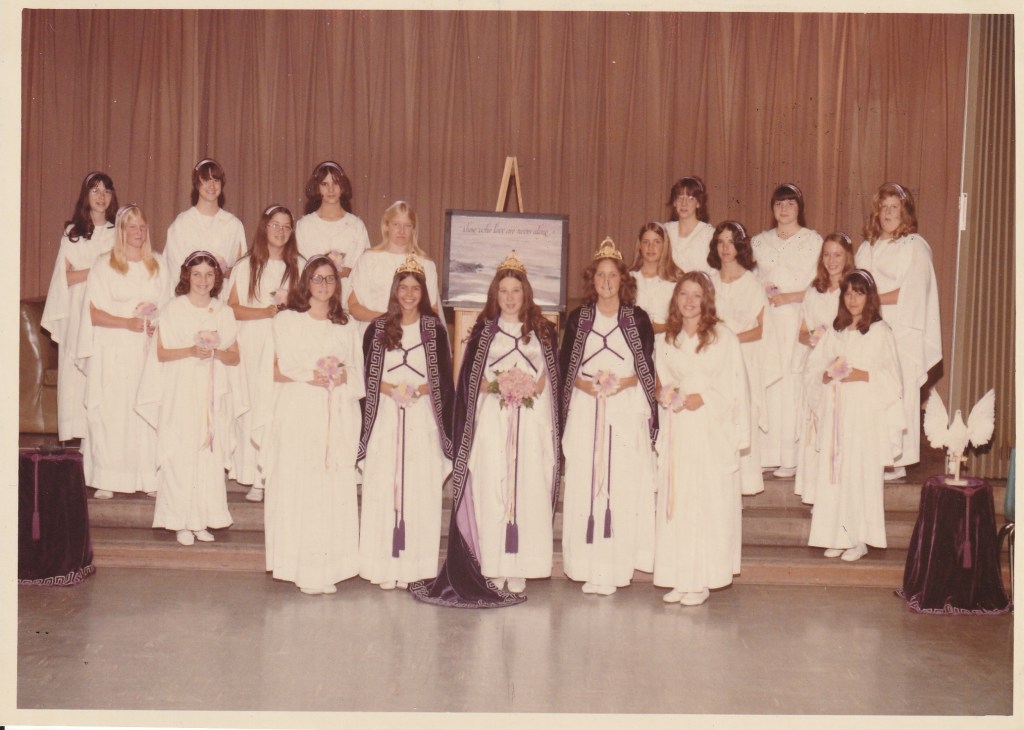
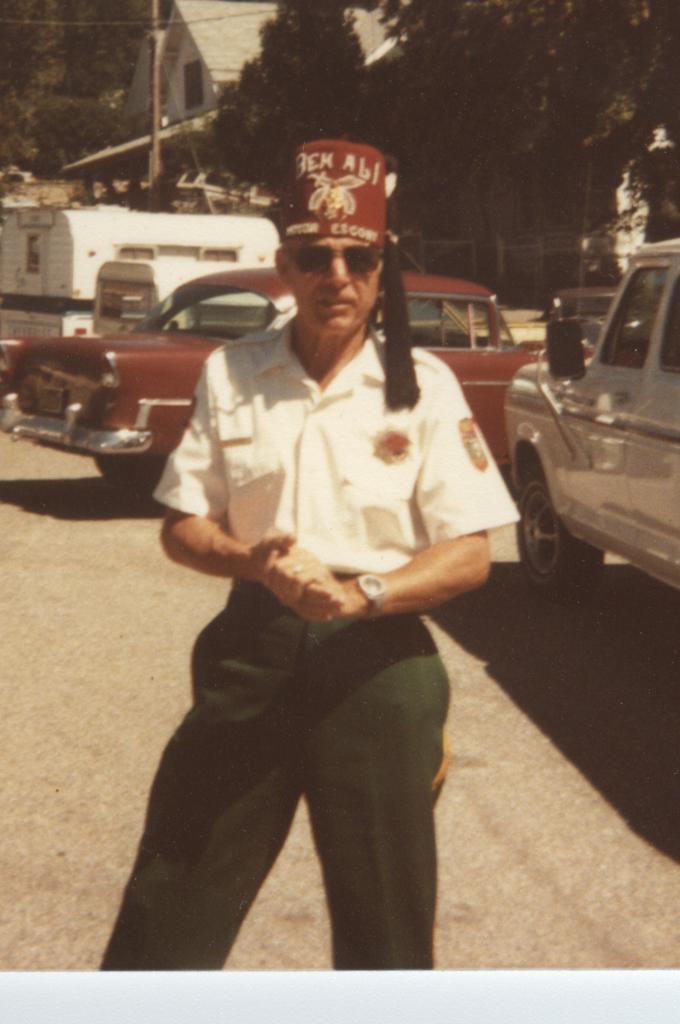
She did remember her grandpa riding a tiny motorcycle in parades, wearing a fez—but she had no idea what that was about. So I showed her the photos of her mom and me in our Job’s Daughters regalia.
I thought we looked like angels.
She thought we looked like a cult.
And in that moment, I realized how easily meaning can be lost when the stories behind the images aren’t told.
Then I asked my own son if he knew that his grandpa was a Mason and me a Job’s daughter. He knew about grandpa, but not about me. I really don’t think he knows what either of them really are.
That’s no one’s fault but mine. So this is for my Niece, my Son and my Granddaughters:
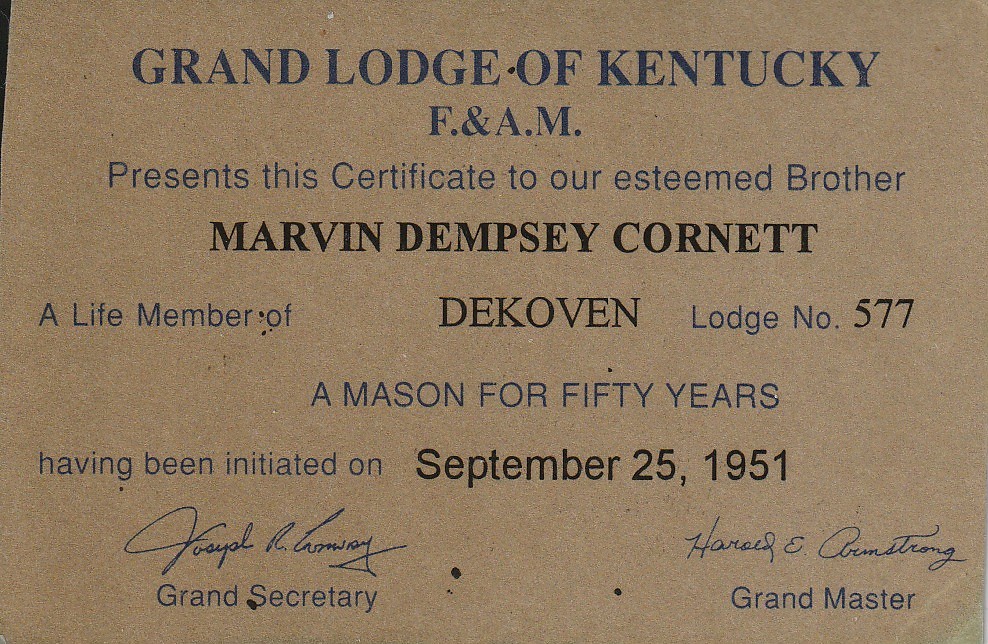
My father became a Mason in 1951—eight years before I was born.
By the time I arrived in 1959, his Masonry was already part of the background of his life. I remembered his fancy ring he wore with a strange symbol. He was a career Army man, a boy from the hollers of Eastern Kentucky. Being a Mason fit neatly into that larger identity of service and structure.
As a child, I don’t remember much about his Masonry at all. If you’d asked me then what a Mason was, I couldn’t have told you.
I didn’t begin to understand any of it until I was invited into something connected to that world myself.
When I was around 12, my father asked me if I would like to become a Job’s Daughter. I didn’t really know what it was, but when I saw the flowing white robes with wings, I thought they looked like angels. That was enough for me. I said yes.
What I didn’t realize was how serious—and how demanding—it would be.
Job’s Daughters required real commitment. Meetings, responsibilities, memorization, and discipline.
When I eventually became an officer—Chaplain—I was expected to memorize loooong ceremonial passages and stand in front of the entire Bethel (that’s what our chapters were called) to lead prayer and song. In other words, I opened the show and closed the show with stuff in the middle that I can’t remember.
I was thirteen years old-1974
And I was painfully shy.
There was no hiding in that role. No fading into the background. I had to speak clearly in the middle of the room. Lead confidently. Hold space for others. At first, it felt impossible. My hands shook. My voice wavered.
But I learned.
I memorized the words. I practiced until they lived in my body. I stood up straight even when I didn’t feel brave. Slowly—almost without noticing—I began to change.
Job’s Daughters pulled me out of my shell. It gave me my first real experience with public speaking, leadership, and responsibility. It taught me how to stand in front of people and be heard.
It’s a skill that stuck with me my entire life! I am thankful to have been a part of it.
My dad was a 32nd degree Mason. What exactly is that?
When I say my dad was a 32nd degree Mason, it sounds mysterious—maybe even a little dramatic. The truth is much less secretive and far more ordinary (and honorable).
Freemasonry is one of the oldest fraternal organizations in the world, with modern roots tracing back to 1717 in England, when local guilds formed what became known as Freemasonry. At its core, Masonry is about moral character, personal responsibility, service to others, and lifelong learning.
The word degree doesn’t mean rank or power. It’s more like levels of learning, similar to grade levels or stages of coursework. Each degree represents lessons taught through symbolism, ceremony, and reflection.
Most Masons start with the first three degrees—Entered Apprentice, Fellow Craft, and Master Mason. From there, some choose to continue their education through additional Masonic bodies. My father did that through the Scottish Rite, where degrees go from the 4th through the 32nd.
So what does 32nd degree actually mean?
It means commitment.
A 32nd degree Mason has spent years studying the principles of Masonry—things like integrity, service, justice, and compassion—and has shown dedication to living those values. It’s not about secrecy or status. It’s about personal growth and service over time.
My dad became a Mason in the middle of his Army career, which makes sense to me now. Masonry appealed to the same things the military did: structure, tradition, discipline, and service to something larger than oneself.
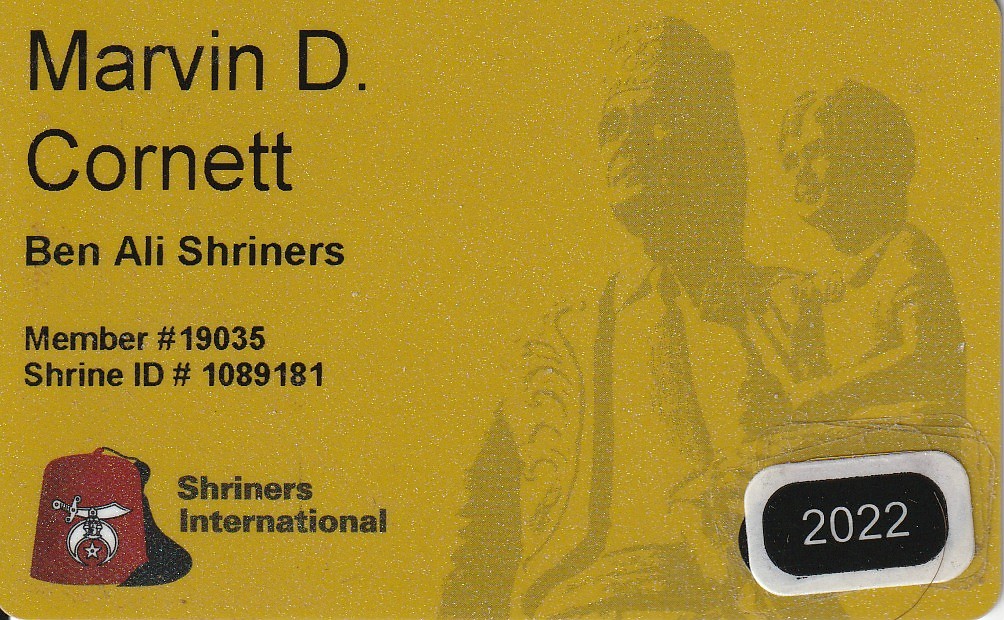
Later, he became a Shriner, a Masonic organization focused on charity—famous for the fez, the parades, and the little motorcycles, and deeply known for supporting children’s hospitals. (photo below) My sister now has the famous Fez, and boy does it sparkle!
So when I say my dad was a 32nd degree Mason, what I really mean is this:
He chose a path that valued service, character, and lifelong learning—and he stayed on it for the rest of his life.
What’s a Job’s Daughter—and Why the Weird Robes?
Job’s Daughters International is a leadership and service organization for girls and young women, connected to Freemasonry. We were typically a daughter or close relative of a Mason. Today all girls can join if they are sponsored by a Mason family and meet the age (10-20) and character requirements.
It was created to teach responsibility, service, confidence, and public speaking through tradition and ceremony.
And the robes?
They’re ceremonial, like choir robes or graduation gowns. Everyone wears the same thing so no one stands out—and so the focus stays on the role and the message, not appearances. The design comes from biblical symbolism meant to represent values like integrity, perseverance, and faith—not a specific religion.
To someone seeing them for the first time, the robes can look weird. But inside the organization, they weren’t about secrecy or mystery.
They were about stepping up, being seen, and learning how to lead.
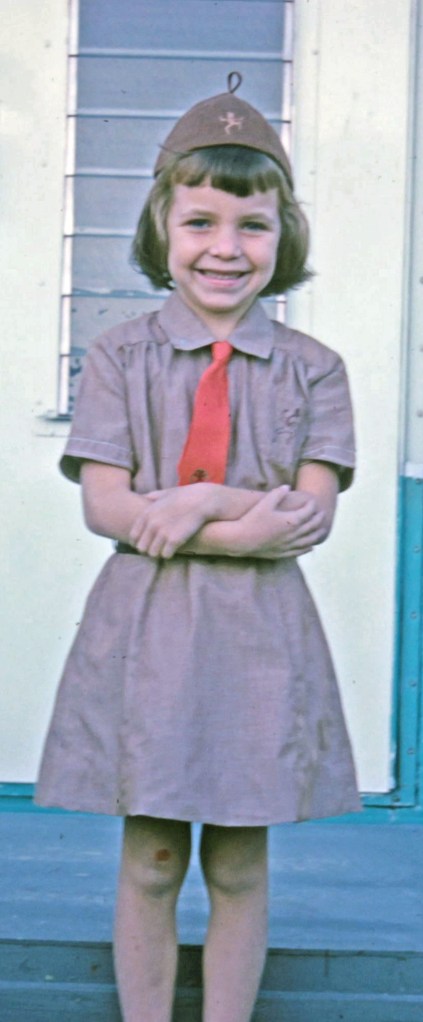
I loved the robe as much as I loved my Brownie uniform!
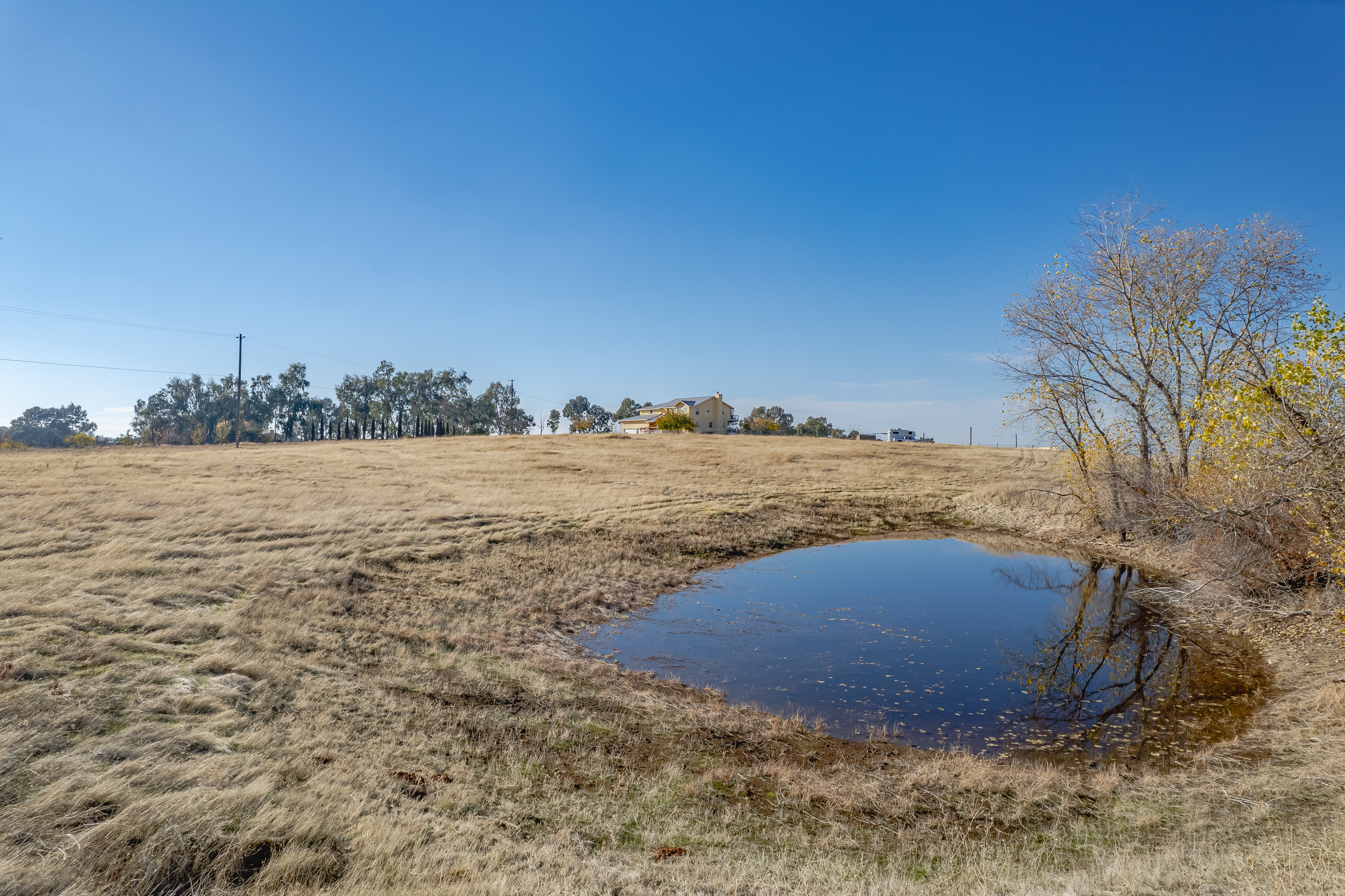
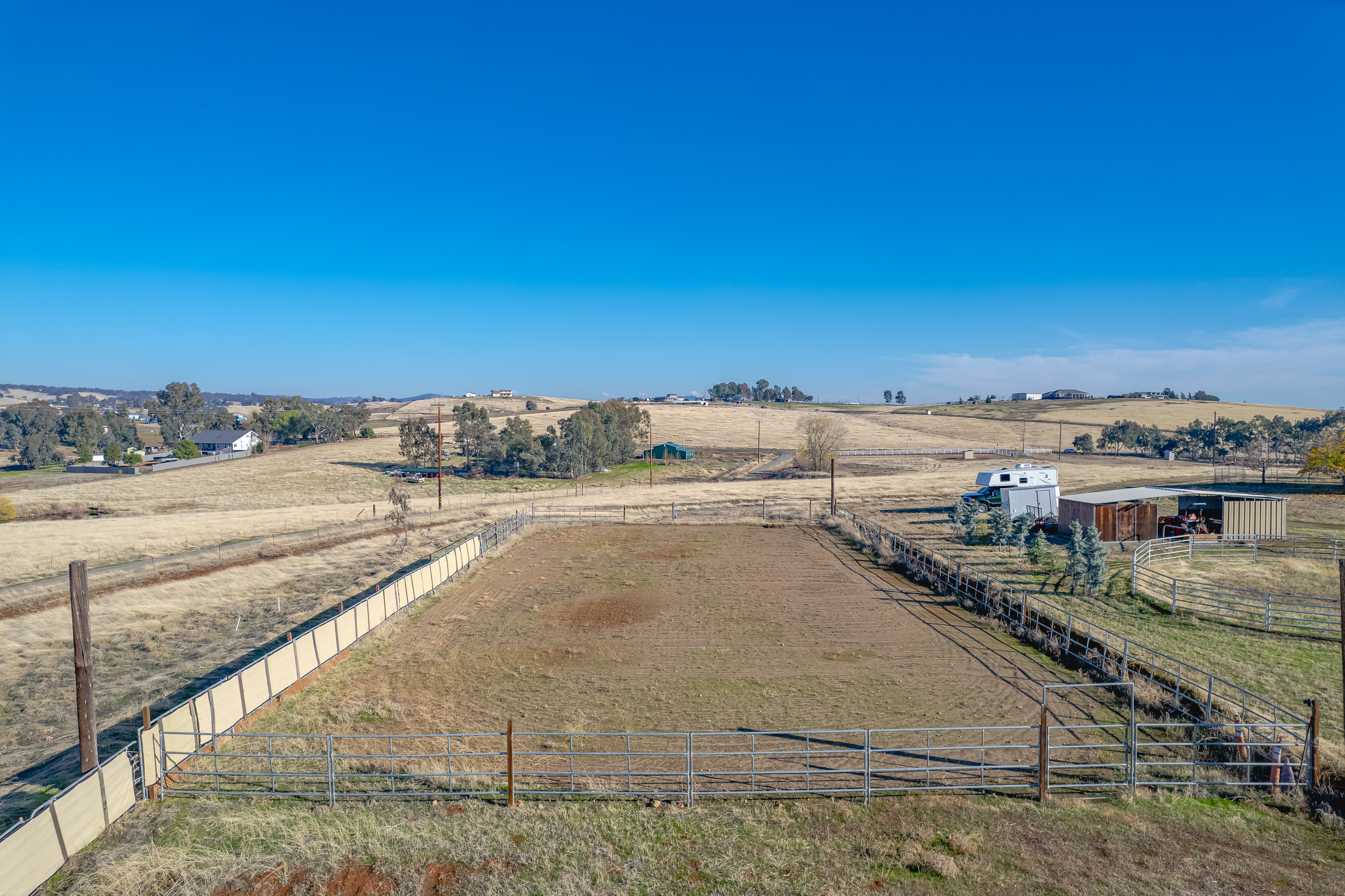
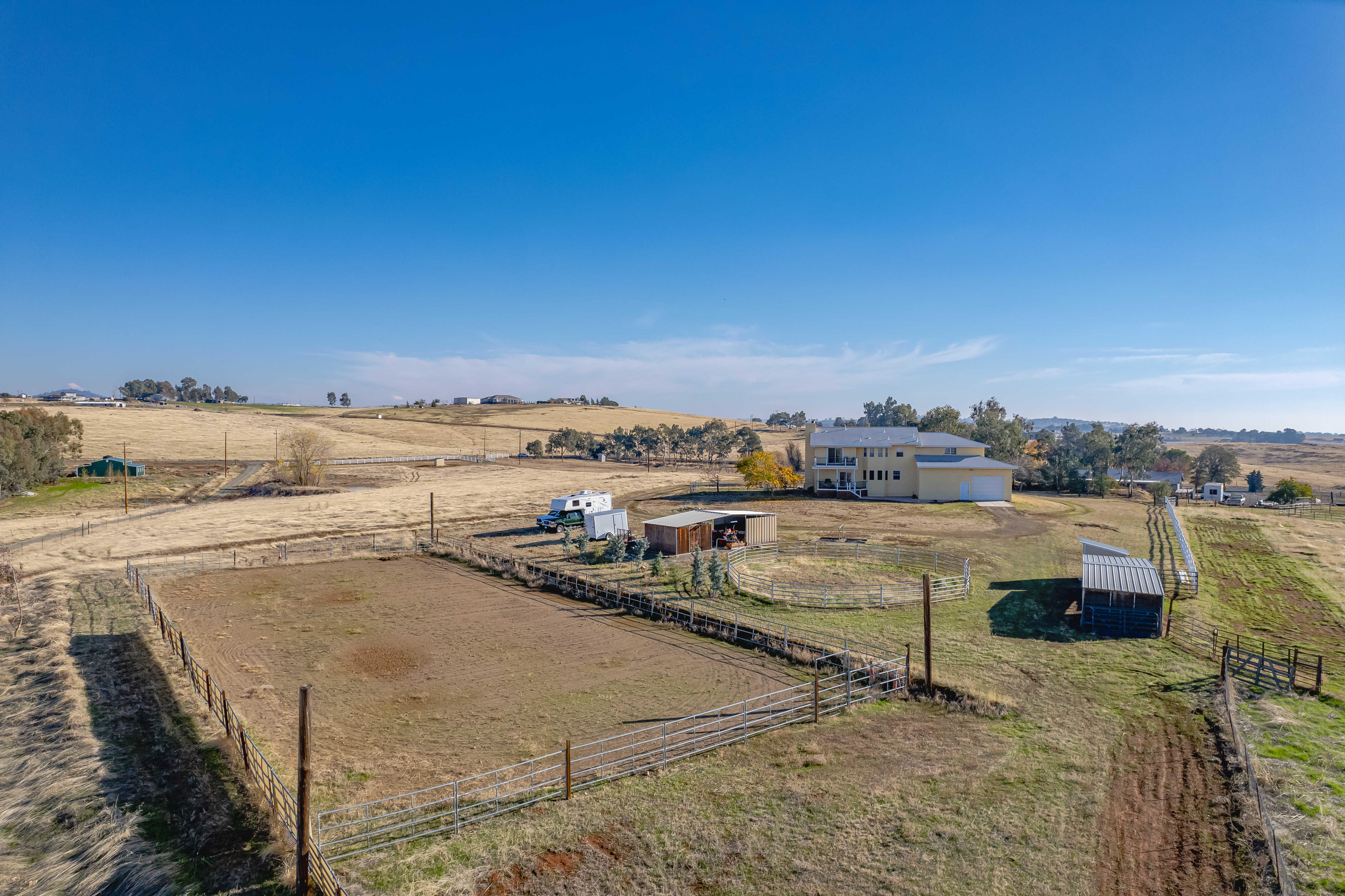
Experience country living on this 11.73-acre horse property in Northern California, near Sacramento. The entire property is fully fenced and cross-fenced, with an electric gate at the entrance and paved roads leading directly to the home. Ideal for horse and animal lovers, it features a riding arena, round pen, hay and equipment barn, and animal shelter.
The home includes a four-car tandem pull-through garage/shop with extended height, ample storage, and a fully wired large air compressor. There’s also an unfinished space above the garage, perfect for expanding the home or creating an ADU. Enjoy stunning sunset views of the foothills from both decks and large windows.
Recent updates include a new roof with a warranty from 2023, two independent HVAC systems installed in 2017 and 2022, and fresh exterior paint in 2022. Inside, the home boasts granite countertops, custom tile flooring, updated bathrooms, and a beautiful, cozy fireplace. All bedrooms feature walk-in closets.
Located just 15 minutes from town, the property offers an easy 45-minute commute to downtown Sacramento. It’s also close to a State Wildlife Area and just five minutes from a large recreational lake, perfect for hiking, horse riding, fishing, watercraft, kayaking, and enjoying nature. This property provides both privacy and convenience. An easy hour-and-a-half drive will take you to Donner Summit in the Sierra for even more adventure.
Whether you’re looking for a horse property or a place to enjoy country living, this home has it all. Listed at $849,999.
In 2012, autonomous vehicle testing in California officially began. This was before I retired in 2014 as a media spokesperson for the California Department of Motor Vehicles (DMV). The Department was overseeing this entire thing in California! It was a fascinating time. Tech enthusiasts and skeptical onlookers alike were wondering if self-driving cars would ever become a reality. I didn’t realize those days at the DMV would come full circle in 2024. In 2024, I found myself riding in a Waymo through the bustling streets of San Francisco. I was very skeptical back then, but here we are!
Here’s the thing… Self Driving cars, Waymo have 29 cameras and 360 degree view. No blind spots like us humans who sit inside of our cars, having to crane our necks to see things. Humans are distracted, emotional, angry, tired, and sometimes under the influence while operating cars. Are self driving cars perfect? NO. They’ve had their issues, but as I see it, like all technology, they will get better with time and innovation. Moving from horse and buggy to automobiles wasn’t perfect either, but look at cars now! I think in 50 (maybe sooner?), these cars will be the norm.
Buckle your seat belt because self-driving big trucks are next!
Even if I’m doing an easy 5 miler in the wilderness, I always carry the 10 essentials and MORE! After having to almost spend the night in the Lassen National Park wilderness completely unprepared after a short hike to a lookout tower, I learned a hard lesson! I now carry items to sustain me in the wilderness until help arrives. This could be hours or even days! Disclaimer: This is what I carry. You may have different ideas! I’d love to hear them!
Here is the link to the fiasco I was involved in a few years ago where I almost had to spend the night in the freezing cold forest!
My Day pack is an REI Trail 40 and Here’s what’s in it! (NONE of the links are affiliate. All are non-sponsored)
First Aid kit: Put together what you like. I also add Leuko tape for blisters.
Fire Starting Materials (Cotton Balls soaked in Petroleum Jelly work great) Don’t forget the lighter or waterproof matches. Even though a fire could save you from freezing to death, you could possibly start a devastating forest fire, even in winter so be very careful! Learn how to start, maintain, and extinguish a life-saving survival fire. There are many videos on Youtube!
Tyvek Sheet (5×5 ft) : https://rb.gy/arbnl5 This is super light (weighs nothing), waterproof, and can be used as a ground sheet, wind block, shelter, etc. I’ve used this to sit in the snow!
Bug Spray with Deet. Good luck using the foo foo kind with no Deet. These mountain skeeters mean business and laugh at your feel-good perfume as they bite the living hell out of you. Trust me, I’ve tried everything!
FOOD! Pack extra in case you get stuck for a while!
A word about navigation apps and what I use:
I rely on a few essential navigation apps, tested and trusted by hardcore mountaineers and thru-hikers. These apps provide reliable navigation and have been field-tested by the toughest adventurers. Here are my go-to primary choices:
Gaia GPSis a powerful app offering detailed topographical maps, weather data, fire information, private property boundaries, and many other useful layers. It’s widely used by serious backcountry hikers. While the free version offers many features, the paid version is highly recommended for those who frequently venture into remote areas.
FarOut: FarOut is particularly valuable for the three long trails: the Pacific Crest Trail (PCT), Continental Divide Trail (CDT), and Appalachian Trail (AT). A one-time fee allows you to download the trail you hike most often—for me, that’s the PCT.
These are my secondary apps:
AllTrails: AllTrails is excellent for researching and finding hiking trails. The paid version includes a cool 3D animated feature, plus up-to-date trail data from recent hikers, which is especially helpful during the spring thaw. However, be cautious with the navigation feature, as it has been known to be unreliable on backcountry trails.
Wikiloc: Wikiloc is another useful app for researching trails and discovering new hiking destinations.
PeakFinder: PeakFinder can be hit or miss when identifying peaks. It’s great when it works, but don’t rely on it in a moving car. The app is free.
Other Things I take:
Hiking Umbrella – Trekking Poles- Water Bladder-Cell Phone- Hat- hiking gloves- roll of duct tape wrapped around chapstick, garbage bag, toilet paper (pack out used!), Hand warmer, Smart water bottle, it fits the water filter, and A FRIEND! Don’t hike alone!
Here is what’s in my multi-night (backpacking) bag!
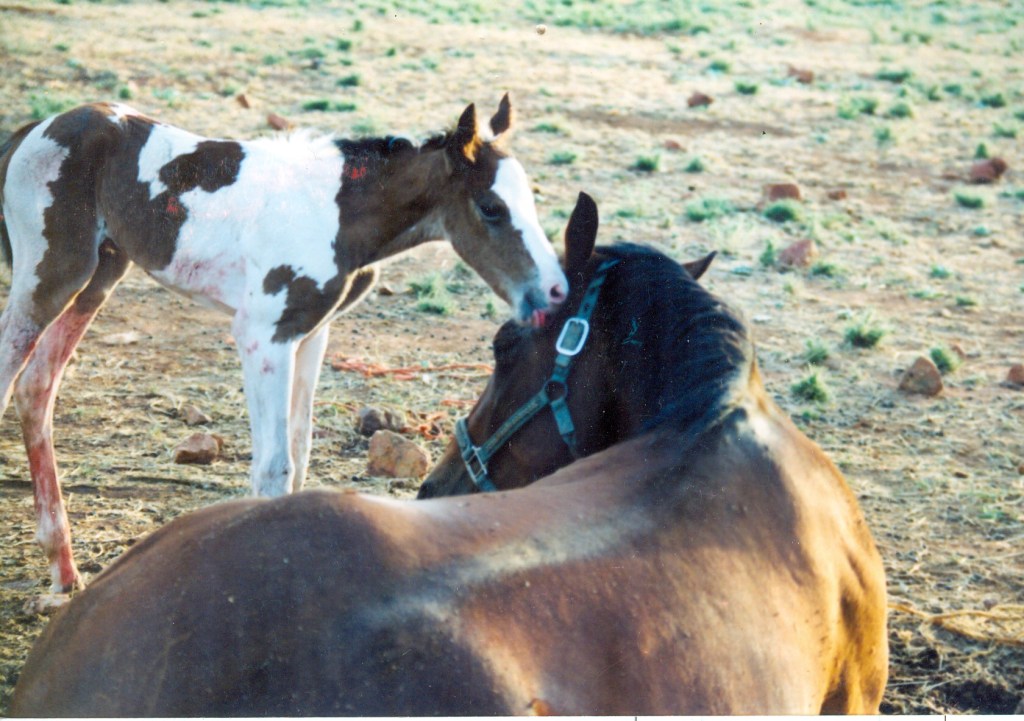
Whiskey, our beloved horse, was born on our ranch. She just celebrated her 22nd birthday this past week. I’ll never forget that day. As the time approached for the birth, I had kept her mom, “Ima,” in a cozy, straw-filled stall. One evening, I came home from work and thought I’d let Ima out of her stall to walk around the pasture and get some exercise. I walked back to the house and proceeded to fix dinner. Not fifteen minutes later, there was someone pounding on my front door! It was my neighbor telling me there was a paint baby standing in our pasture. Whiskey had arrived quickly in the early evening, which is unusual as horses typically prefer to give birth in the wee hours of the morning. She was stunning, with loud splashes of color.
Whiskey was meant to be my husband’s horse. He broke her himself, and together they had many adventures. As the other horses aged and went into retirement, I found myself no longer riding, and Whiskey wasn’t being ridden either. She was much too young to be retired and had many more years of adventures ahead. So, we made the hard decision to rehome her at age 18. She now has a fantastic home at a ranch where she and her new owner are winning prizes. It was the best decision we made for Whiskey. Eventually, over the next couple of years, all of our remaining horses, Ima, Oreo, and Buddy, were laid to rest in their 30s.
With all the horses gone, only Mija, the donkey, was left. We had adopted Mija from the Bureau of Land Managements Wild Burrow program back in 2001. She was totally wild but we got her tamed in just a few days. That’s how donkeys operate! She’s been a pasture pet ever since. When the last horse passed, she stood in the barn, staring at the house all day. She was so very lonely. Our neighbor across the road offered to take her, saying she could live her days with their horse and many goats. Mija is so happy now and acts as a protector of the goats. She won’t let any dogs into the pasture.
Both Whiskey and Mija are living their best lives with the best humans on the planet. I am forever grateful to Jackie Clemmers, Jeanne Walker, and Pam Lockrem for taking such good care of these two.
It was surreal to see all of my pastures and barn empty. No more daily feedings or filling up water buckets. It took me a few weeks to not automatically go out in the evening to feed and water. Now, my husband has to do all of the mowing.
Rehoming Whiskey and Mija was a difficult decision, but knowing they are happy and well-cared for makes it all worthwhile. The memories of our time with them are cherished, and I am comforted by the knowledge that they are living their forever best lives.
This post is part of my “Moving to New Mexico” Series. Go here to start from the beginning.
Don’t forget to enter your email to get alerts when I make a new post! YOU are THE BEST!
Whiskey about 15 minutes old!
Whiskey and Jackie winning buckles!
Mija feeling sad with Alex from the loss of all her buddies.
Mija with one of her goats at her new home. She’s shedding out her thick winter coat.
And so it begins… the purging of a 25-year life on a 12-acre ranch. When we bought the place in 2000, we had two horses and a dream. That dream, like our herd, eventually grew—to four horses, one donkey, two sheep, five dogs, and a boatload of barn cats that kept mysteriously disappearing (cue Wile E. Coyote). We poured blood, sweat, and more money than we care to admit into home improvements, barns, fencing—only to find that they often needed repairing or replacing. It seemed to be a never-ending task, but every minute of country living was worth it. City life just wasn’t in our blood any longer, replaced instead by a mix of hay, dirt, rattlesnakes, and the occasional whiff of manure.
Fast forward 25 years, and with all the animals either having passed on or been re-homed (our beloved donkey and one horse are now living their best retirement lives on amazing ranches), it’s time to bid farewell to our rustic paradise and find a new adventure. We’ve decided that this new chapter will unfold in the northern part of New Mexico, likely between Albuquerque (took me a while to learn how to spell that) and Santa Fe. Our next home might have less fencing to mend and fewer barns to build, but it promises new memories.
As we pack up (and purge) our lives, we’ve discovered that humor is our best packing companion. Each item we box up brings a memory, a laugh, and many “Do I really need this” questions. The process is chaotic, but it’s also a reminder of all the joy, hard work, and love we’ve poured into a small slice of heaven in the windy grasslands. While we’re excited about our new adventure, we’ll carry a piece of this ranch—and all its quirks and joys—with us. Here’s to new beginnings. I hope to capture the process of all the stuff that has yet to be done to get this ranch on the market and all that entails! D-Day to market is December 1. We got this. (I think)
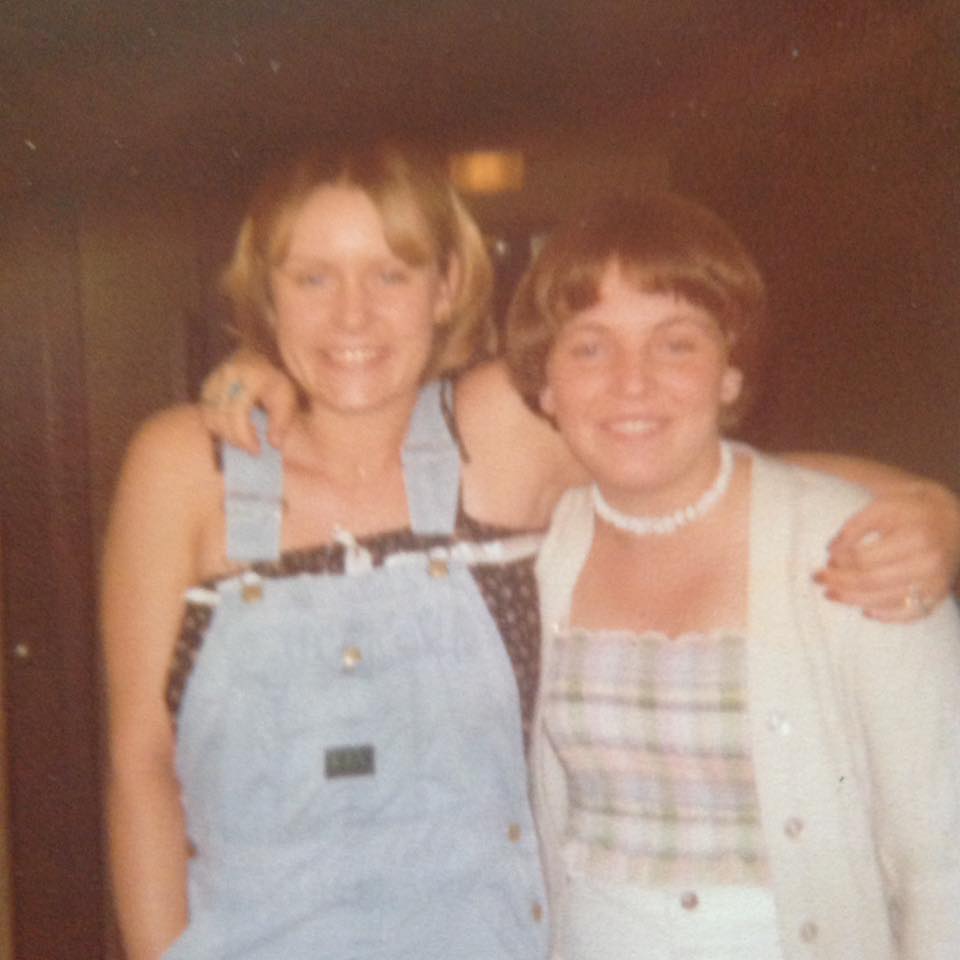
2017 Reunited after not seeing each other for 32 years! College Roommates 1978
Where are all my Friends? Hey there honorary members of the “Been There, Done That” club! I’ve been thinking a lot about all the people that I’ve met through the years as I turn 65 this year. Some were tight friends that I have lost contact with for various reason and some friends I’ve had since my teen years and am still in contact with. My photo albums are filled with people I’ve known over the years, dead and alive. Strap on your hiking boots and grab a cup of herbal tea.. or….., because we’re about to embark on a journey through the highs and heartbreaking lows of social circles at in our “Golden Years”.
The Lowdown on Friends vs. Acquaintances Acquaintances are like the neighbors you wave to while picking up the morning paper, or the cashier at the local grocery store who knows your name but you for, but of the love of God, can’t remember theirs. Acquaintances are the salt to your pepper—nice to have around, but they don’t exactly spice up your life.
Friends are the crème de la crème of companionship. They’re the ones who’ve seen you through thick and thin, from bad hair to bad divorces and break ups. Friends are like fine wine—they only get better with age, and they’re always there to toast to your triumphs and console you through life’s drama. Do you hear a song and immediately think of a certain person in your life? I sure do, and some people have a string of songs that remind me of them! You reading this Lauren and Patti?
Friendships are Fleeting Our 20s and 30s The Great Migration: Ah, the glory days of our twenties, when the world was our oyster and our social circles were tighter than grandma’s knitting needles. But alas, life had other plans, and before we knew it, we were spread across the country like butter on toast, chasing dreams and trying to find our place in the world. With each move to a new city or state, we left behind a trail of memories and a Rolodex of friends scattered to the winds.
Remember the Christmas Newsletter? With all of my good friends scattered between two continents, I used to relish the Christmas season and the cards and newsletters I would get from my missed friends. Then friends would move and my Christmas card would come back undelivered-no forwarding address. There was no internet to just “Google” to get current address. Decades would go by before I had the internet and could possibly find some long lost friends. I have found many, but some I have never found to this day. They are only fond memories of good times and faces in my faded photo albums.
Friends Die Yep, the older we get, the better the odds our friends will move on to the afterlife. I’ve lost a few friends in the past few years. They were much too young to die in my book, but they are gone none the less. I do have a few regrets of not making that one last phone call, but I can’t dwell on that. I must go on and remember the friendship and the good times we had. My dad lived to be 101 and he outlived pretty much all of his long time friends! It was kind of sad for him. The price of living to be over 100. Not many get to.
Pick up the Phone and Use your Vocal Chords! Social media has helped reunite friends, but I find that my friends are now 2 dimensional photos and video on my computer screen. Picking up the phone every now and then is like hearing a favorite song when they say “Hello”. That familiar voice you belly laugh with when you reminisce about that cringeworthy “thing” you did back in the day! You know.. that thing where you may or may not be able to run for public office?
So, my fellow Medicare age posse, cherish your friends like prized possessions, because in a world filled with acquaintanceship and fleeting friendships, true companionship is as rare and precious as a winning lottery ticket. Whether you’re reminiscing about the good old days with old pals or forging new friendships in the twilight years of life, one thing’s for sure: life’s a lot more fun when you’ve got someone to share it with. So grab your aging buddies, raise a glass and toast to the friends who’ve stood the test of time, no matter how far the winds of change may blow us. Cheers to friendship, laughter, and the sweet symphony of shared memories!


















 twylaworld.com
Leave a comment